If you are buying a car or if you already have one, it is important for you to understand how your vehicle works so that you will know what you must do in case it gets into trouble. When do you need to change your tire? How will you know if your batteries need replacement? What could be an indication that the mechanism under your hood needs an expert? Knowing how your vehicle works will help you understand what your vehicle needs.
Here is what may be found under the hood:
- Cylinder: The number and arrangement depends on the type of vehicle being used, and it signifies how powerful it is.
- Valve: It is where the air and fuel get in while the exhaust is pushed out.
- Spark Plug: It ignites the fuel and air mixture so as to initiate combustion.
- Piston: Located inside the cylinder, this piece of metal moves up and down.
- Piston Ring: Preventing the air and fuel mixture and exhaust to leak during combustion and compression. It also keeps the oil within the sump.
- Connecting Rod: It connects the piston to the crankshaft.
- Crankshaft: Turns the piston from its up and down movement into circular motion.
- Sump: Surrounds the crankshaft. It has some amount of oil.
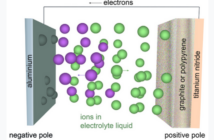
- Lead-Acid battery: Provides “electricity” to the vehicle.
Now that you know some important parts of the vehicle, let me explain to you how it works. Let me use all possible layman terms so that you may be able to comprehend it well.
Your battery should be charged well as it will be the source of electricity to make it work. You have to make sure that it is well-maintained as a failing lead-acid battery will affect the performance of your vehicle. Cold winter months can be particularly difficult for the battery.
The main purpose of the engine is to convert the gasoline into energy.
Apart from the gasoline, another important part of your engine is the battery. It produces as much as 12-V, enough to keep the vehicle running, as well as other parts that require electricity such as the radio, air conditioner, and so on.
Four Stroke Combustion Cycle:
- Intake stroke
- Compression stroke
- Combustion stroke
- Exhaust Stroke
In order for you to imagine how the vehicle is energized, imagine an activated piston energized by the lead-acid battery.
As the piston moves, the intake valve opens, making way to a cylinder full of air and gasoline where it will have to feed the engine. As the intake stroke is accomplished, the piston will go back to its initial position where it has to compress the gas and air acquired from the cylinder. During the compression stroke, additional powerful energy is generated as this is where the sparkplug ignites the gasoline, leading to explosion. When the mixture explodes, the piston will move downwards, hitting the base stroke. The exhaust valve is opened, and the exhaust goes out of the tailpipe.
Explained in the simplest method possible, this is how the car engine works.
Related articles: