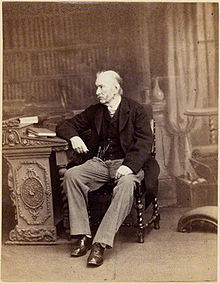
Samuel Hunter Christie was a British scientist and Mathematician born on 22nd March 1784. He was a student of Mathematics at Trinity College, Cambridge.
Samuel Christie was fascinated by magnetism, especially Earth’s magnetic field, and made it his subject of research. He suggested many changes in the magnetic compass to improve it and the sailor’s compass, as we know it today, owes a lot to him.
In 1833 Samuel Christie presented a paper on electrical and magnetic properties of metal. In the paper he also proposed a method for measuring unknown resistance in electric circuits. He called it the diamond method because of the shape of electrical circuit in his experiment. But the method was popularized some 10 years later in 1843, when Sir Charles Wheatstone proposed a device called Wheatstone Bridge, as shown in Figure 1, to calculate resistance in electrical circuits.

Sir Charles Wheatstone gave full credit to Samuel Hunter Christie for his invention but the device bears his name rather than Christie’s.
Samuel Christie became a Fellow of Royal Society in 1826. From 1838 to 1854 he taught mathematics at Royal Military Academy, Woolwich. He died on 24th January 1865 at the age of 80.
No mention of Samuel Hunter Christie can be complete without the confusion his surname creates with Christie’s, the famous auctioneers of London. Coincidentally, his father’s name was the same as that of the founder of Christie’s auction house, James Christie!! But Samuel Hunter Christie was a humble man of humble background, a student of science and mathematics to his last days.
Related Posts: