Transporting batteries can be hazardous. Improperly packaged batteries can short circuit and cause fire. Under the U. S. Code of Federal Regulations (49 CFR), strict guidelines are imposed to ensure the safety in transporting batteries.
There are different types of batteries with various chemical components. Each type of battery requires standard packaging and safety precautions.
Lithium-based batteries
Lithium ion (rechargeable) and lithium metal (non-rechargeable) batteries are designed to provide high amounts of power. They sometimes produce high amount of heat and cause fire. For this reason, they are listed as Class 9 Miscellaneous hazardous batteries in the U. S. To safely transport this type of battery, specific packaging, marking and labeling guidelines are required.
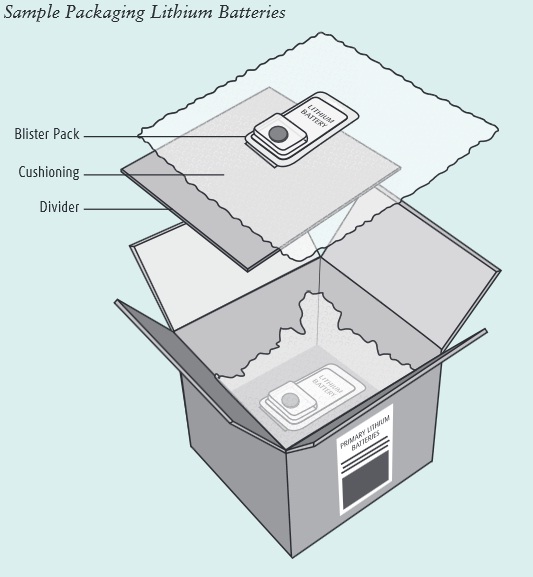
The most important thing to consider in transporting lithium-based batteries is to prevent short circuit. To accomplish this, the battery can be placed individually in a plastic bag and place a non-conductive tape on the terminals. Another way is not to remove the batteries from its blister pack. Place some cushion in between the batteries before placing them in a box.

Even though lithium-based batteries are considered hazardous, there are some exceptions as long as they do not exceed the following limitation:
- • Batteries must not exceed 2 grams of lithium metal
- • Batteries must not exceed 8 grams of “equivalent lithium content”
Lead acid batteries
Lead acid batteries are commonly used in cars. They are considered to be Class 8 Corrosive hazardous materials in the U. S., and also require specific packaging, marking and labeling guidelines.
These are some of the requirements and precautions in transporting lead acid batteries:
- • The batteries must be placed upright. Place a non-conductive divider to separate each battery.
- • Place terminal protection on the batteries.
- • The batteries must be subjected to pressure differential and vibration testing.
- • The battery and package must be marked with “NONSPILLABLE” or “NONSPILLABLE BATTERY”.
- • Electrolyte must not flow from a ruptured or cracked case at 55° C (131° F).
Related articles:
Three Battery Problems And How To Deal With Each