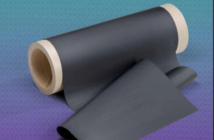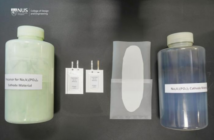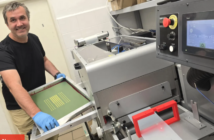
Traditional battery designs are either rectangular, or tubular. Consequently, we grew up with bulky devices. Our smartphones may be thinner now, but then they also slip easily out of our pockets. When guests arrive at a party, the first thing they do is look for somewhere to put them down. There must be a better way. Scientists at the Ulsan National Institute of Science and Technology have found a way to make a stretchable wearable battery and they believe it could be practical.
A Little More About the Ulsan National Institute
The Ulsan National Institute of Science and Technology – UNIST for short – is a South Korean university that dedicates itself to research in science and technology. It is new, having been founded in 2007. However, it is turning out a brilliant new generation of scientists who have come up with a design for stretchable wearable batteries.

These young scientists, working with more experienced academics have developed a “highly stretchable rechargeable lithium-ion battery based on aqueous electrolytes” according to a report by Science Daily. This may enable us to develop genuinely ergonomic devices someday, but there have been so many promises before.
How the UNIST Stretchable Wearable Batteries Work
Stretchable wearable batteries have been an unresolved enigma for a while now. If someone could come up to the challenge, we could resolve stubborn mechanical and conductivity challenges. The UNIST team has worked around these with a conductive polymer composite prototype.
Their design contains hybrid carbon fillers containing carbon nanotubes, and carbon black combined in an apparently simple process. “Our findings are expected to expand the number of stretchable nanocomposites. With electrochemical and mechanical properties available for use in a wide variety of applications,” Lead Professor Seo affirms.

However, will their research actually reach fruition in our stores? The thought of stretchable wearable batteries is alluring. Co-Professor So Youn Kim says, “This study is expected to facilitate the design of stretchable nanocomposites.” But will his work see light in the real world we inhabit? The bioinspired structure is similar to the Brazilian grape tree Jabuticaba. The fleshy fruit tastes just like grape in case you wondered.
Related
New Technology for Wearable Electronics
Why Lithium-Ion Cells Are Mostly Round
Preview Image: Ulsan City Center