


Scientists like their world tidy and orderly. They want a theory that explains everything, and they have these for most. When they find something out of kilter, they develop a theory to explain it. Then they conduct experiments to prove they are right. Take Moores Law as an example of the scientific mind.
Applying Moore’s Law to Battery Development
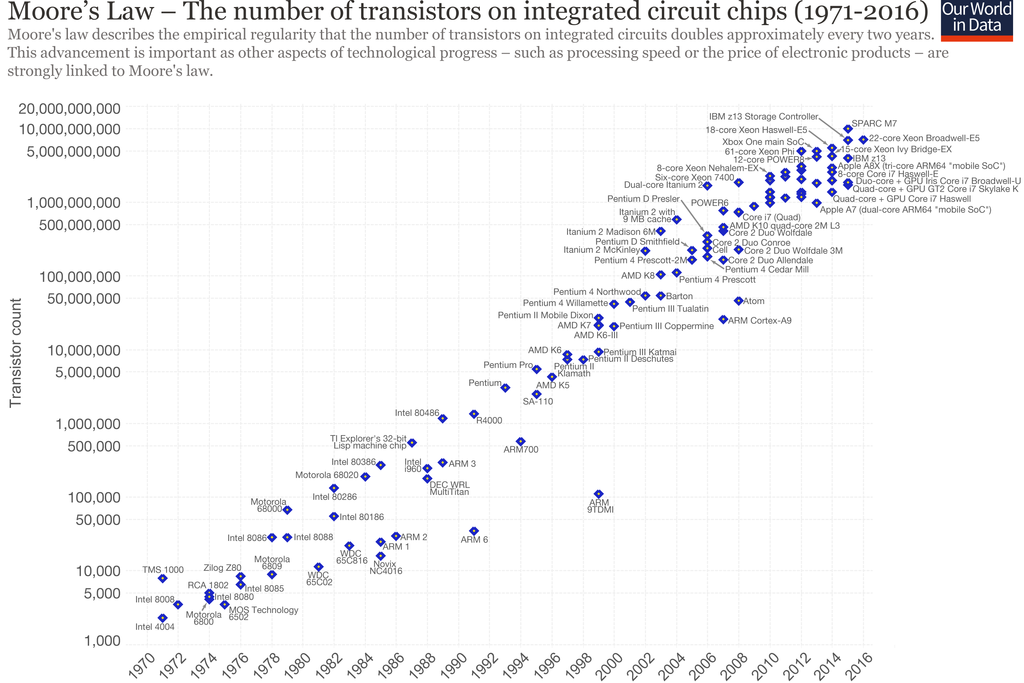
Gordon Moore became extremely wealthy after he founded Intel Corporation. He reached the conclusion the number of semiconductors in integrated circuits would double every two years.
The industry just loved the way this neatly packaged it a secure future. In fact, it became fashionable to apply Moores Law to almost any technology in rapid growth, including batteries. We came across an interesting thought piece in The Next Web that questions this assumption.
Larry Alton’s throught provoking article questions why battery technology is only limping along. “Despite incremental advancements,” he observes, “batteries haven’t changed all that much over the past decade”.
Batteries Are Not Following Moores Curve of Growth
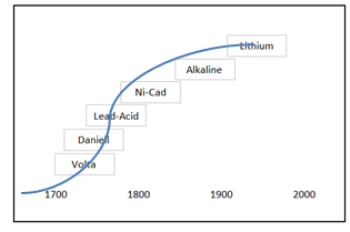
He goes on to describe how this this “stagnation … is putting a cap on several technologies that might otherwise advance forward”. This set us wondering why Moores Law no longer seems to apply to our realm of batteries.
After all, as Larry Alton says, there are dozens of possibilities for lithium battery replacements. We have written about numerous new technologies here on these pages. There are so many possibilities our industry seems not to know where to start.
Moreover rolling out new technology has become hugely expensive, without there being solid guarantees. These impediments are disproving Moores Law with regard to renewable energy, smartphones, and electric cars too, to an extent.
We seem to be doing what humans do well, and that ensured our survival in hunter-gatherer days. We stick to what works, and we don’t take chances with our money. Thus, as long as investors don’t take risks, Moores Law will no longer apply to batteries and we will patch what we have…
Related
Charging 18650 Li-Ion Batteries Faster
Lithium Batteries with Perforated Fracture Lines
Preview Image: Gordon Moore 1968


