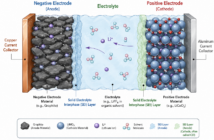
Why are flow batteries overlooked in the stampede to squeeze every ounce from lithium and cobalt? Informed opinion often suggests we could counter global warming faster with redox flow batteries. Could this be because the technology is so different, the batteries don’t even have a ‘proper’ electrolyte? We dedicate this post to helping consumers understand them better.
Redox Flow Batteries Overlooked Without Valid Reasons
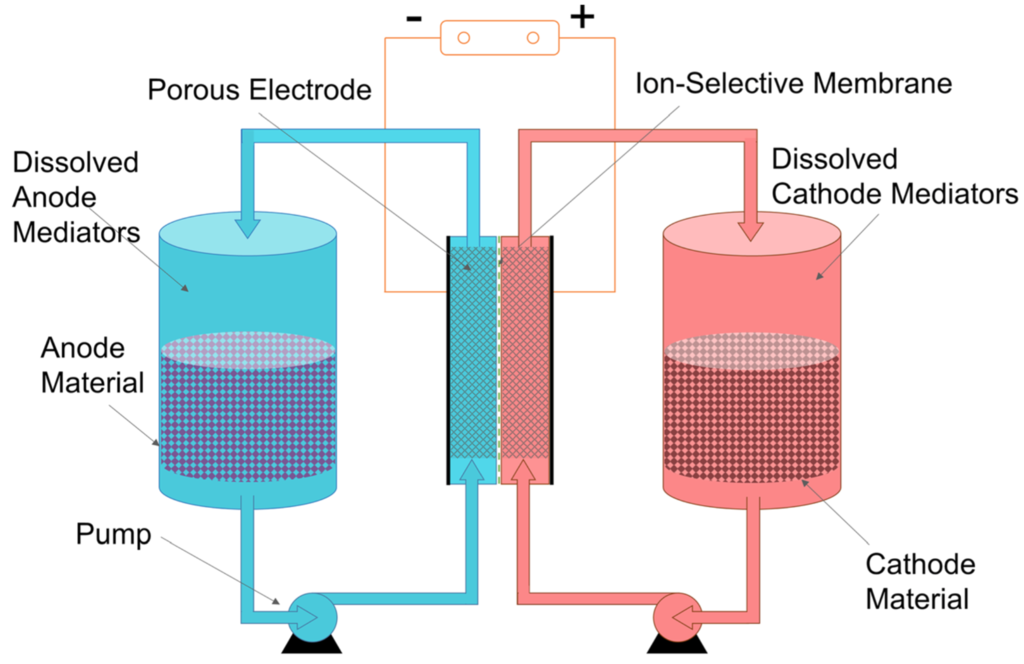
Flow batteries often have the suffix ‘redox’ added, to represent the reduction-oxidation process. Essentially, they comprise two tanks of liquids suffused with electro-active elements. These tanks have a selective permeable membrane between them allowing ions to exchange.
We find flow batteries overlooked in almost every application. This is despite the fact they work equally well as refillable-fuel, and rechargeable batteries. This may be down to them requiring more sophisticated electronics, and not being as dense as lithium batteries. However, they are vastly superior in terms of their carbon footprints and environmental impacts.
Working Principles of (Redox) Flow Batteries
An electron releases from the negative (anode) side of the battery during discharge via an oxidation reaction. It moves through an external device to do its work. It then travels via a reduction reaction to the positive side of the flow battery.
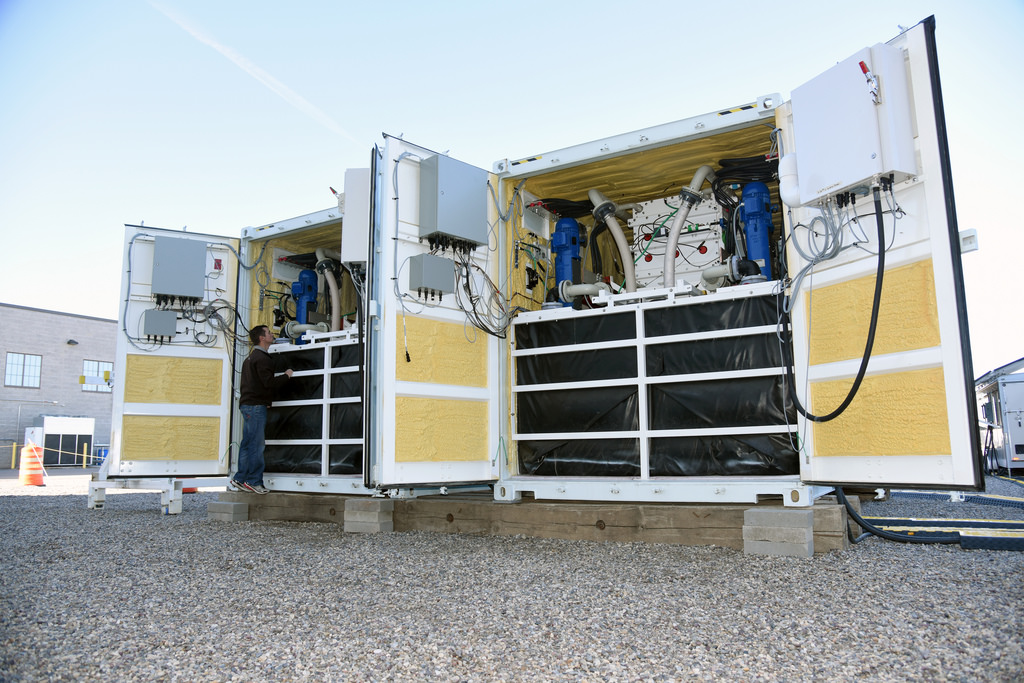
Flow batteries overlooked for other purposes owing to their bulk, are ideally suited for grid-level storage. This is as opposed to electric vehicles and digital devices where size is at a premium.
Flow batteries are accordingly ideal for one-kilowatt-hour to ten-megawatt-hour static applications. Some day they may replace lithium-ion batteries for load balancing, and storing energy from renewable sources.
These peak-shaving roles will enable a lower, overall volume of energy generation. The flow batteries overlooked by a conservative generation could help us do so much more with less warming. The European Union is calling for faster roll outs of redox flow batteries, as we reported in a previous post.
Related
Redox Flow Batteries Could Come of Age
We Can Make Better Batteries EU Argues
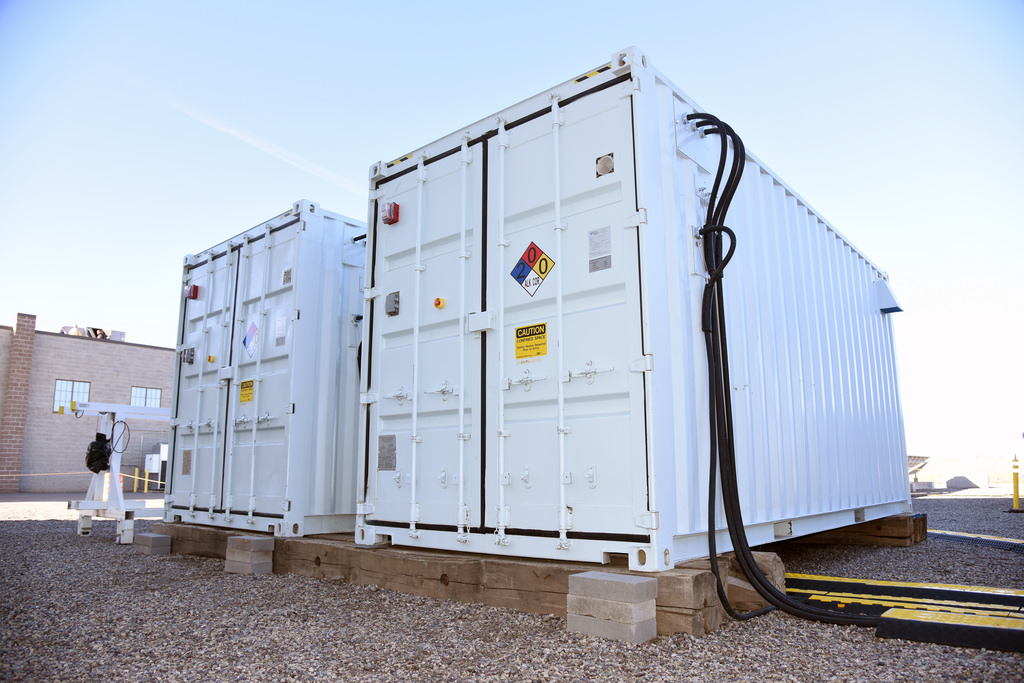
Preview Image: Flow Battery at Idaho National Laboratory Microgrid Test Bed