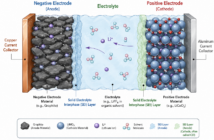
Batteries move ions between their electrodes, and electrons through devices in a phenomenon we call electricity. That term comes from the Greek word ‘ēlektron’ for amber. Amber is a fossilized tree resin that generates static electricity. However, battery efficiency is only as good as the flow of the ions. Now, a group of scientists have found nanotubes are new sources for faster power.
If Nanotubes Are New Sources Could They Replace Batteries?
This is theoretically possible, although a breakthrough in energy and power storage does not mean we can stop using batteries. However, Phys.Org reports “The power generated relative to energy source size is three-to-four times greater than the best lithium-ion batteries”.
However, this discovery that nanotubes are new sources for faster power came as a surprise to all concerned. Scientists from MIT School of Electrical and Computer Engineering were working with the Nano Technology Research Group while on sabbatical. They were measuring the acceleration of a chemical reaction along a nanotube when something amazing happened.
They Discovered the Chemical Reaction Generated Power
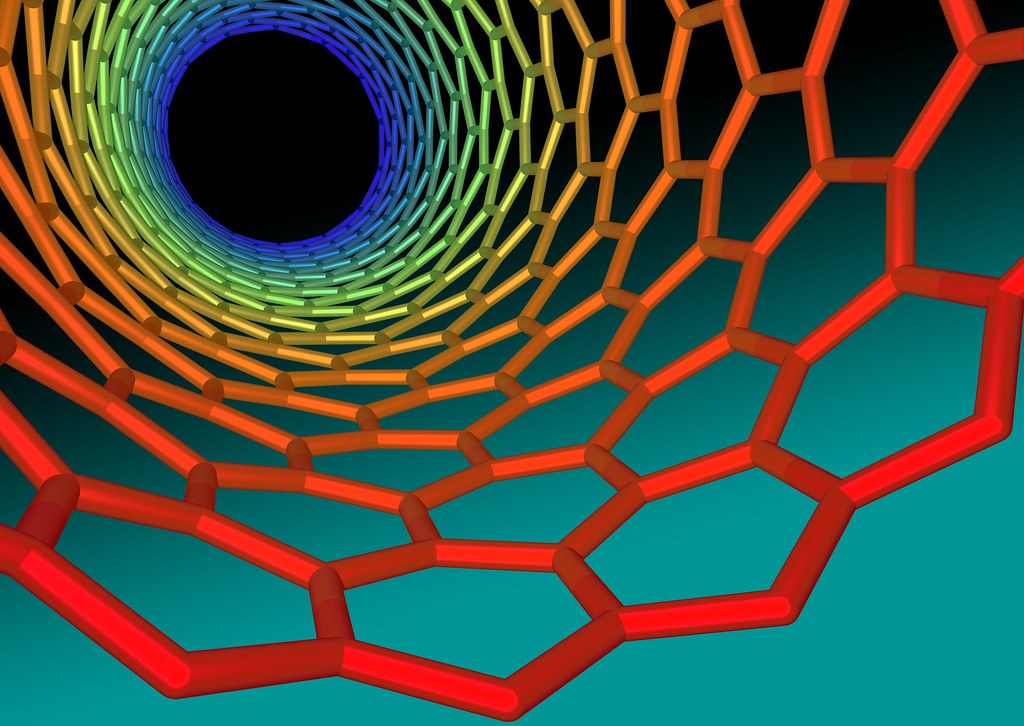
Nanotubes comprise a two-dimensional hexagonal lattice bent and joined in one direction to form a hollow cylinder. Moreover, there are a number of versions, among them carbon nanotubes grown on silicon substrates.

Current research focuses mainly on using these as composite fibers in the manufacture of exceptionally strong, lightweight products. However, this latest research is following a new direction.
“Coating a nanotube in nitrocellulose fuel and igniting one end set off a combustion wave along it,” the researchers explain. In this way, “We discovered a nanotube is an excellent conductor of heat from burning fuel. Even better, the combustion wave creates a strong electric current. Moreover, it’s the first viable nanoscale approach to power generation that exploits the thermoelectric effect.”
Hence, after overcoming the feasibility issues associated with minimizing dimensions, nanotubes are new sources for faster power at the nano level.
Related
Carbon Nanotubes: Replacing Silicon In Circuits
A Paper Thin Battery for Tight Places in Space
Preview Image: Triple-Walled Armchair Carbon Nanotube