The COVID-19 pandemic began when a virus spread amongst us, against which we had no defense. We needed to develop natural immunity from an infection, or from having a vaccine soon as we could. But we had no idea how long this protection would last. Now researchers in Oregon are beginning to wonder is durable immunity an end to the pandemic?
Has Sufficient Time Passed to Have an Idea?
Scientists had no way of knowing for sure whether the immunity would last, say for a year until that time period had elapsed. However, we are now reaching the point where the pandemic began over a year ago. This provides us with a database that is sufficiently large for our scientists to be able to draw fact-based conclusions.
Researchers at Oregon Health & Science University announced a breakthrough on June 3, 2021 which just reached our attention. They say the blood of people infected by COVID-19 eleven months ago, ‘shows tell-tale signals of immunity against new variants of the novel coronavirus’.
Could This Durable Immunity Signal an End to the Pandemic?
Senior study author Bill Messer has an impressive pedigree. That’s because he is assistant professor of molecular microbiology and immunology. And also of medicine (infectious diseases) at Oregon Health & Science University School of Medicine.
He says ‘We think these results give us real reason for optimism. The current variants of concern are not likely to truly escape the immune system of people recovered from infection.’
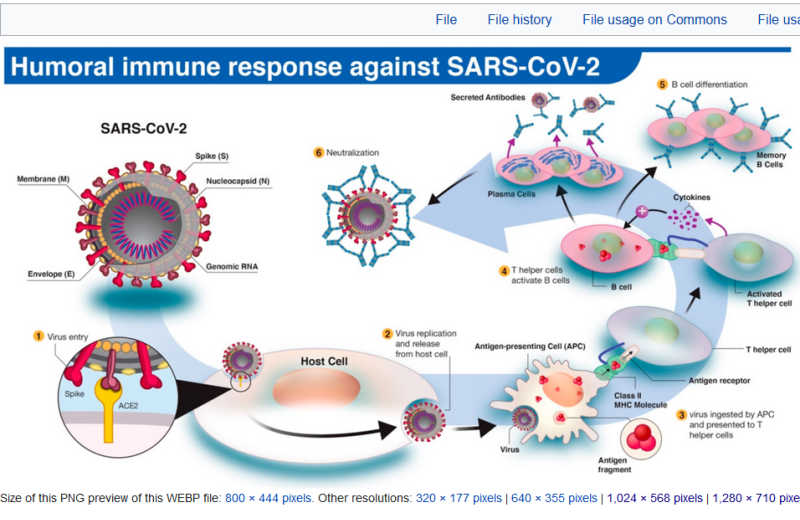
Could this durable immunity indeed be an end to the COVID pandemic? The researchers did not always find antibodies in blood serum of people who had mild or asymptomatic infections. However, all those they tested had ‘patrolling immune cells called memory B-cells, programed to produce SARS-CoV-2 antibodies’.
Related
Durable Immunity Against Secondary COVID
Is Long Term Immunity to COVID-19 Possible
Preview Image: COVID-19 Immune Response Cycle