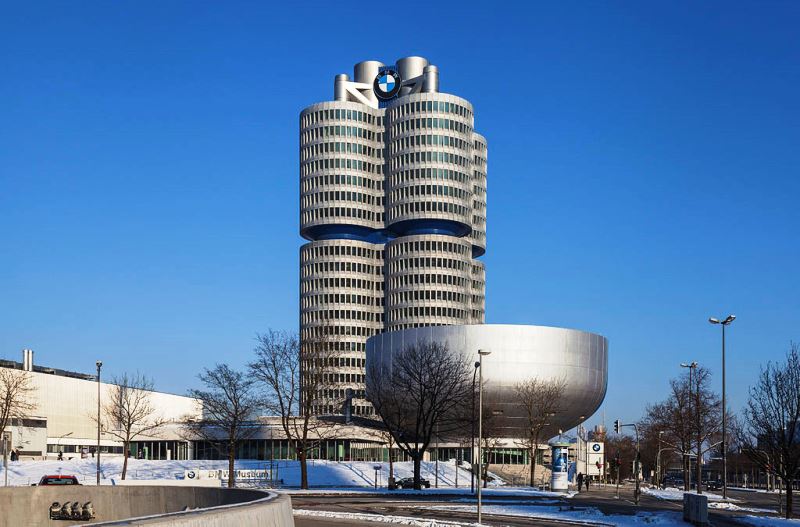
BMW corporate headquarters in Munich, Germany may remind some of single cell batteries in series, but this is unintentional. Locals call it the BMW-Vierzylinder, literally ‘BMW four-cylinder’. Their approach may turn out to be a safer bet, with BMW reconsidering making EV batteries at least for now.
BMW Uncertain Which EV Battery Technology to Back
‘We are not yet at the point where we can say what technology will accompany us for the next 10 to 15 years’. That’s according to finance chief Nicolas Peter speaking to Reuters. ‘Therefore we prefer to invest in worldwide battery partners’. However, not all BMW rivals are as cautious. Volkswagen and Daimler are forging ahead.
Reuters reported January 13, 2022 how Daimler plans to build 8 battery gigafactories in conjunction with partners. While Volkswagen intends to have six large plants up and running in Europe by 2030. We wondered why BMW is reconsidering making EV batteries while its main European rivals are so determined.
Possible Motives Why BMW is Reconsidering Making EV Batteries
Lithium-ion batteries are still the most popular choice among EV vehicle manufacturers. However this is because they offer the optimum, as opposed to the ideal solution.
There is no known, practical end game for lithium-ion when its capacity falls below what electric vehicles require. Moreover, the current generation compares badly with gasoline in terms of driving range.
Meanwhile, BMW assured Reuters they have secure supplies ‘for the next few years’ while battery research continues. Only time will tell whether BMW’s gamble plays off. It just could, if current research projects get to market.
Scientists at Clemson University are exploring potassium-ion battery technology that could be cheaper and safer than conventional lithium-ion batteries. But that’s just one of the exciting options in our world of batteries right now.
Recent Posts
Revolutionary Rubber Battery for E-Vehicles
More Density with New Lithium-Air Battery
Preview Image: BMW Corporate Munich Headquarters