Those variant numbers can be quite confusing. Although scientists hoped to achieve the opposite when they created them. Thank the stars we came across an explainer article by Gavi, the vaccine alliance hoping to improve global access to children’s vaccines. We’ll try our best to explain their lay persons guide to the COVID numbers game. There’s a link to the full version at the end of the article if you still have questions.
A COVID Numbers Game for Lay Persons
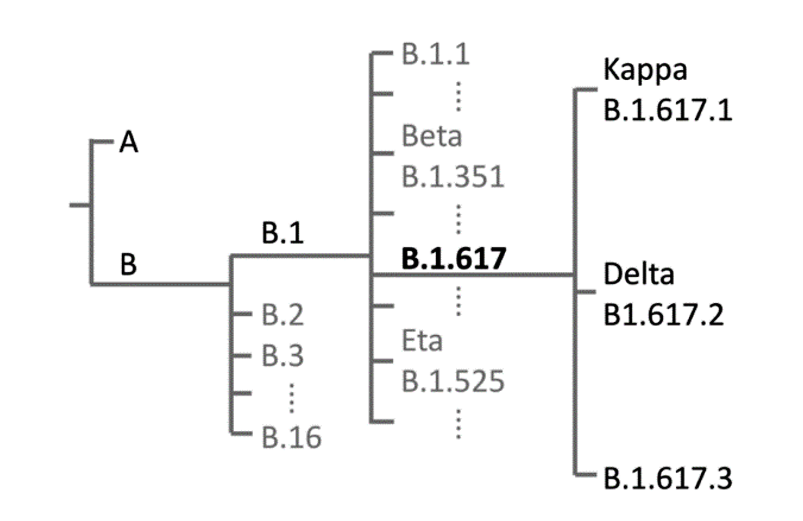
China identified two distinct strains of COVID at the beginning of the pandemic, and labeled them ‘A’ and ‘B’. This is normal scientific practice to keep things simple. But they mutated as viruses do, and so they called the first of these ‘A.1’ and ‘B.1 respectively.
The mutations also created lineages of their own. By late 2020, alphanumeric mouthfuls like B.1.1.7 or B.1.351 were common. To epidemiologists they made sense. However, the rest of us were becoming more and more confused.
One way to clarify things is to imagine a family tree of COVID, starting with grandparents, parents, aunts, uncles. And as time passes an increasingly bewildering array of cousins and second cousins materializes, Gavi explains.
And So They Decided to Give the Lineages Names
Scientists agreed this was confusing. For a while, they named the major lineages after countries where they first noticed them. But this stigmatized those nations, and so they decided to use characters in the Greek alphabet instead.
However, this does not change the underlying structure of the family tree. We can imagine a family that emigrated from Europe a century ago, and settled in the new world. We might call them ‘the ‘American Smiths’ and the ‘Canadian Smiths’ for example.
So far so good, because there are 24 characters in the Greek alphabet. Let’s hope we nail the coronavirus soon, and have some Greek characters left over spare.
Breaking News
WHO Warns of Rising Deaths and Infections
Sequencing to Identify New COVID Variants