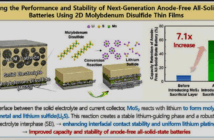
Solid state batteries have several distinct advantages over those with liquid electrolytes. That’s because their electrolytic composition can neither catch fire, nor explode. This advantage is becoming increasingly important as sporadic lithium-ion battery incidents continue. However that said, solid state battery technology still has two major drawbacks that keep sales of lithium-ion batteries soaring.
Fundamentals of Solid State Battery Design
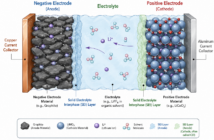
A battery discharges, and recharges by shuttling ions between its electrodes. This occurs when it releases its energy, or an external source replenishes its store. An electrolyte positioned between the electrodes regulates the chemical process underpinning this.
The electrolyte in a lead-acid battery is a sulfuric-acid-water solution. This is a stable composition that cannot overheat significantly, explode, or catch fire. However, this electrolyte is unsuitable for lithium-ion batteries, which require a less-stable lithium-salt electrolyte dissolved in a mixture of organic ingredients.
Lithium is a flammable metal that can, and will react thermally when it overheats. This should not happen with a well-regulated, quality lithium-ion battery, which remains within its operating limits. Battery-management systems are supposed to assure this. However, there have been a number of unfortunate incidents and they do continue.
Major Drawbacks of Solid Electrolyte Batteries
Safety considerations are becoming a major factor in consumer choices. Many users prefer the added assurance offered by solid state lithium batteries, because these resist leakage, and reduce the risk of fire in the confined space of an electric vehicle.
Solid lithium batteries also have greater density than lithium-ion ones, meaning they can store more energy. But solid state battery technology still has two major disadvantages that are holding sales back.
The first of these drawbacks is cost, which can only really come down when demand increases, and production volumes scale up. The second disadvantage is their relatively low power output, or voltage. But research is ongoing, and we continue to watch this space with interest.
More Information
Solid State Batteries and Future EVs