The scramble to implement renewable energy storage caused a stampede for battery materials, almost without precedent. The recent heatwaves in North America convince us of the magnitude of the task ahead. But we are running out of critical materials rapidly, and must recycle everything we can. Scientists at Berkeley laboratory have come up with a quick release battery binder, that makes it easier to dismantle spent batteries.
The Challenge is Undoing the ‘Jelly Roll’ Assembly
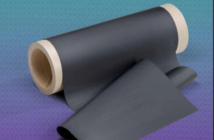
Most tubular battery cells comprise flat sheets of different active materials, that manufacturers glue together using a ‘binder’. These binders are really strong, because they don’t want the batteries breaking up inside. And then they roll their assembly up to save space, using the jelly roll method Gaston Planté devised for his first lead-acid battery.
Gaston Planté’s method was easy to take apart, because his flexible lead sheets assumed the spiral shape naturally. Subsequent battery cell developers used different, more rigid materials that did not hold curves. And so we guess they got into the habit of using glue to hold everything together. This created a historic problem that makes battery cells tricky to take apart and recycle.
A Quick Release Battery Binder for Lithium Cells
Lithium-ion battery cells are a particular challenge, because of their complexity. Moreover, some of their materials are toxic, and can overheat and catch fire if not handled correctly. Taken together, this means battery recyclers cannot put spent lithium-ion batteries in a crusher, as they can safely do with many other battery designs.
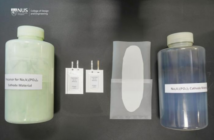
The scientists at Berkeley laboratory realized they needed a quick release battery binder that softened under controlled circumstances, so the battery components naturally separated. They developed a new ‘glue’ that is a composite of two inexpensive polymers, polyacrylic acid and polyethyleneimine, that dissolves in water.
When they open a lithium-ion battery bound together this way, and place the assembly in water, something amazing happens. The components almost ‘float apart’, making it easier to recycle valuable materials like nickel and cobalt efficiently. This binder could be the effective, inexpensive, and non-toxic solution for lithium-ion battery recycling we were waiting for.
More Information
Japanese Recyclers Report More Lithium Fires