Lithium-ion battery vehicles have a superior driving range, because of their advanced technology. However, the small but real threat of fire deters some motorists, and lithium metal is in short supply, and costly. Sodium-ion batteries overcome these two disadvantages, but have shorter driving ranges. China announced two new sodium-ion electric cars in an apparent move to break the deadlock.
Why Two New Sodium-Ion Electric Cars Now?
The Chinese economy has leveled out, with employment prospects for young graduates less readily available. Therefore, many consumers are more cautious, and trimming their budgets where they can. However, there is another reason why a shorter driving range may work for them between recharges.
A large proportion of Chinese citizens live in mega-cities, with fast rail connections between them. Citizens who own their own cars are therefore more likely to use them for shorter trips within city boundaries.
Sodium-ion batteries suit this driving pattern. They may have less density than lithium-ion, but they do deliver similar power. The China automotive industry appears to have made a smart move by announcing two new sodium-ion electric cars as the old year ends, and a new one begins.
Small, No-Frills Cars a Chinese Tradition
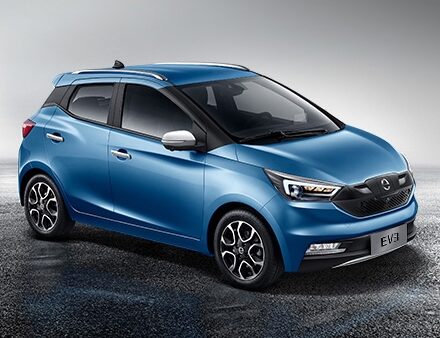
China has long welcomed small, no-frills cars, according to Clean Technica recently. Jiangling Motors Group announced it is offering a sodium-ion version of its popular EV3 car, with batteries from Farasis Energy. This pouch-battery alternative should deliver a 150-mile driving range between recharges, compared to the 185 miles of the lithium-ion version.
The second of the new sodium-ion electric cars on offer in China is by Anhui Jianghuai Automobile Group Corporation. This one uses cylindrical sodium-ion batteries from Hina Battery. The two cars will have similar driving ranges, although the one with the pouch batteries will apparently cost around 15% less.
More Information
Sodium-Ion Electric Car Unwrapped