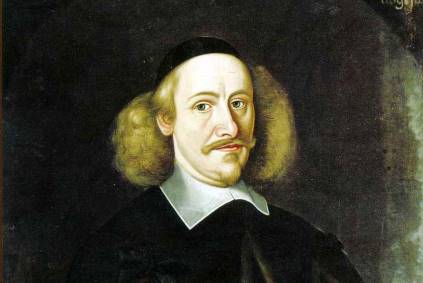
Otto von Guericke was the first person to demonstrate static electricity. This is a condition where negative and positive charges are in separate materials, and move from one to the other when touched. If this sounds a like a battery it may have been the first one, with the possible exception of the Baghdad Parthian battery.
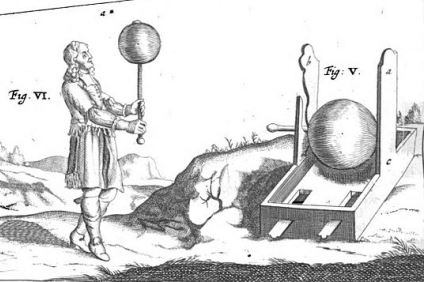
The story goes that Otto von Guericke made a ‘large sulphur globe’ in 1660. When he rubbed and turned his ‘electric machine’ he could get small pieces of paper and feathers to stick to it.
This was a relatively minor invention compared to his other achievements. They included a treatise entitled ‘The Nature of Space and the Possibility of the Void’ in which he debated whether God had a material existence.
Otto von Guericke and the Principles of Repulsion and Attraction
Otto von Guericke was interested in the ability of his body to have an effect ‘beyond its boundaries’. He also wanted to know how the earth attracted objects back to it thrown into the air. He wrote, “If the Earth has a fitting and appropriate attractive potency it will also have a potency of repelling things that might be dangerous or disagreeable to it,” and made his globe to prove the point.
His key discovery insofar as electricity is concerned was polarity, although he did not call it that. He observed that “light bodies are repelled from a sulphur sphere which has been rubbed with a dry hand, and are not again attracted until they have touched another body.”
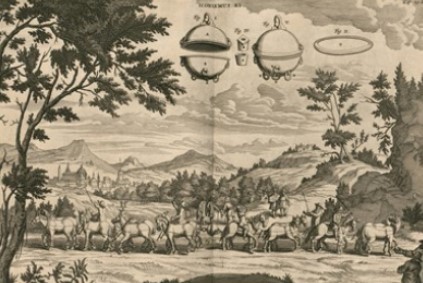
Otto von Guericke may have invented the first electrical machine, although we cannot say for certain he imagined the first battery. He was an interesting fellow caught up in the vestiges of medieval thinking.
Yet at the same time he was also a visionary, endlessly tinkering and experimenting to see what he could find out about ‘reciprocal forces’ as he called them.
When we leave certainty behind, we discover new things. Perhaps this was his enduring legacy?
Related