
Two young researchers at University of Maryland in Baltimore County, just helped invent an energy storage device for active people. However, we doubt that this device contains an anode, a cathode and an electrolyte, because their invention is mechanical. In simple terms, they invented twisted carbon nanotube batteries that work like springs to store and release energy.
A Layperson’s Definition of Twisted Carbon Nanotubes
Carbon nanotubes are extremely thin tubes of carbon atoms that look something like ropes. They are lightweight, yet extremely difficult to break. Moreover, their mechanical, electrical, and thermal properties have intrigued scientists for decades.
“Humans have long stored energy in mechanical coil springs to power devices such as watches and toys,” lead researcher Kumar Ujjain explains. “This research shows twisted carbon nanotubes have great potential for mechanical energy storage. We are excited to share the news with the world.”
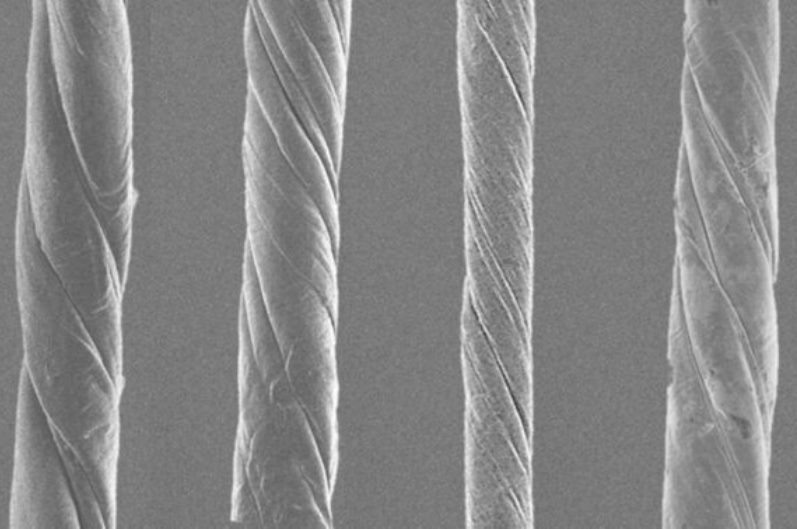
An international team has shown that twisted carbon nanotube ropes are able to store three times the energy of lithium-ion batteries. This thought holds promise for future, lightweight energy storage. It could for example be ideal for compact medical devices and implants.
More About This Research Into Carbon Nanotube Batteries
The work that lead to the discovery of twisted carbon nanotube batteries began with a review of single-wall carbon nanotubes. These are straws formed from pure carbon sheets only one-atom thick. They are easy to manufacture, and 100-times stronger than steel.
When the researchers decided to investigate these tubes’ energy storage potential, they assembled ‘ropes’ from commercially available stock. First, they twisted sets of them into single ‘threads’, and coated them with various substances to increase the their flexibility and strength.
Then they measured the energy their twisted carbon nanotube batteries released as they unwound. The best of their prototypes stored 15,000 times more energy per unit mass than steel springs. This store remained consistent and accessible across a wide range of temperatures. And moreover, their product is safer for humans than batteries.
More Information
Nanotubes Are New Sources for Faster Power
Carbon Nanotubes: Replacing Silicon In Circuits
Preview Image: Twisted Carbon Nanotube Ropes