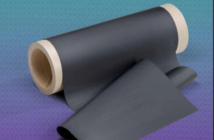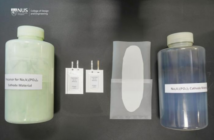
The weight of lithium batteries in electric cars and battery storage is acceptable, although it could be improved. We tolerate this situation because batteries help to reduce carbon dioxide pollution. However, their weight prevents their use in deep space exploration. Researchers at Tsinghua University, China developed a super-light deep space carbon dioxide battery (LiC02), that could be useful for airplanes too.
“Impressive Efficiency” From Tsinghua University LiC02 Battery
A typical Li-CO2 battery design has a lithium-metal anode, a non-aqueous electrolyte, and a porous cathode. The cathode is the point where carbon dioxide reduces to form lithium carbonate and carbon, during battery discharge.
This is also the site where the reverse reaction occurs during recharge. The result is a ‘sluggish’ outcome, poor reaction reversibility, and low energy efficiency that has hindered researchers until now.
But this novel carbon dioxide battery we describe here includes active sites at both the MoS2 and Co9S8 locations. This results in a ‘two-dimensional material with a large number of exposed dual active sites’, creating ‘synergistic effects facilitating reaction kinetics’.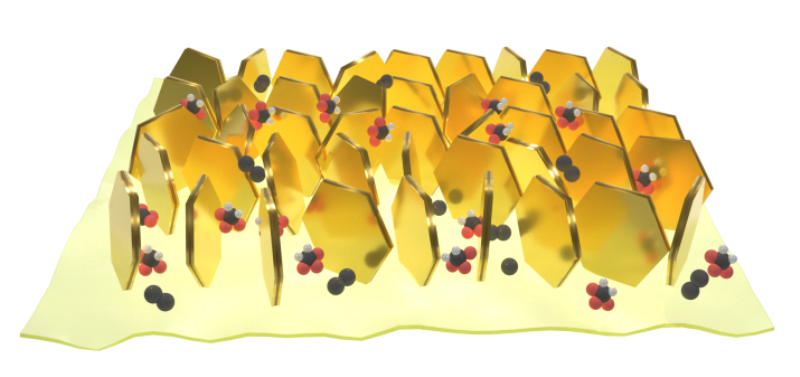
The New Catalyst With MoS2 hexagons Growing Vertically on a Co9S8 base (Tsinghua University)
In addition, the pores in the carbon dioxide battery sheets also ‘facilitate diffusion of carbon dioxide and electrolyte through the materials’. And finally, the pores provide ample storage space for the solid discharge products.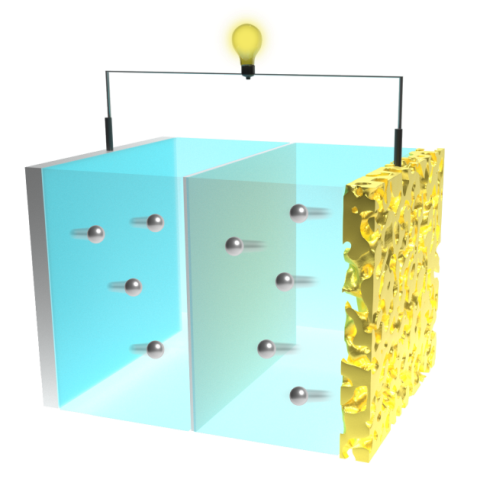
Novel Bidirectional Catalyst For Li-CO2 Battery (Tsinghua University)
The team developed a new catalyst that overcame these issues, previously holding back a working carbon dioxide battery. The result is a better lightweight battery design, with an energy efficiency of over 81%. But the Tsinghua University team has more work to do on their invention. They still need to perfect their anode, to prevent unwanted lithium plating, and then find an ideal electrolyte.
More Information
Sodium Sulfur Flower Power? What Next!