We think of the three parameters that come together to make a viable product when evaluating the lithium iron phosphate battery against the alternatives. These considerations are
- Energy density meaning the amount of power the battery can store.
- Power density being the rate at which the battery can deliver the energy.
- The design life of the battery in terms of numbers of recharges.
Equally importantly, Safety recently became an essential fourth criteria. Safety depends on the rate at which a battery charges, and discharges. In practical terms, we want our smartphones to recharge quickly so we can slip them in our pockets. By the same token we are happy to leave a cordless power tool on charge overnight.
The Design of the Lithium Iron Phosphate Battery

The LFP battery, named for lithium ferrophosphate, has lithium iron phosphate as the cathode. You can learn more about the chemistry of LiFePO4 here if this is of interest to you.
Again, we prefer to focus on the batteries themselves. While they have lower energy capacity, they are able to deliver power faster. They are also inherently safer, and thus well suited to backup power and vehicles.
History of Lithium Iron Phosphate Battery Development
John Goodenough introduced the idea of using LiFePO4 as a cathode in 1996. He liked it because it was non-toxic, used abundant material, and was thermally stable. However, while its electrochemical performance was excellent, it had low electrical conductivity.
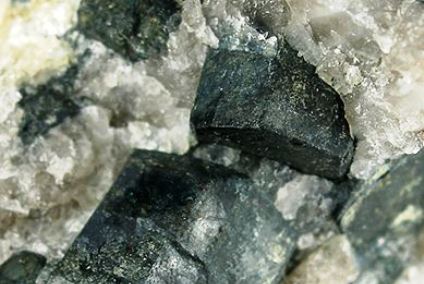
Michael Armand and his team cracked the problem by coating smaller lithium ferrophosphate particles with conductive carbon.
This made the lithium iron phosphate battery commercially viable.
We now find it in products marketed by Black and Decker (DeWalt), Fisker Karma, Daimler, Cessna and BAE Systems.
The Overarching Factor: Safety
Lithium iron chemistry delivers a longer rechargable life, and consistent energy until exhausted. Perhaps its biggest advantage is its thermal and chemical stability. It does not decompose at high temperature, and it is relatively difficult to ignite.
Related