Lightweight lithium metal has made a heavy impact on society, in these past ten years. It has revolutionized the battery industry, enabled mass-renewable energy, and brought a new challenge to our fire firefighting teams. Extracting raw lithium is currently complex and expensive, according to Penn State University. But now scientists working there, have opened a gate to rapid low energy lithium extraction.
Rapid Lithium Extraction in a Matter of Minutes
The new, patented method is environmentally-friendly, according to the press release we link to below. The researchers make this claim on the basis of their method reducing energy use, greenhouse gas emissions, and industrial waste too.
Most North American lithium metal arrives from China already extracted. However, if we start sourcing our own deposits using current methods, then we will need to do so as cheaply and environmentally-responsibly as possible.
Comparing the Two Methods of Extraction
The Penn State University method uses far fewer harsh chemicals, and considerably less energy, than the current method. It is also able to extract 99% of the lithium in rocks in minutes.
This procedure compares well with the current method that takes hours to extract 96% of the potential. “What makes our approach especially promising, is its compatibility with existing industrial infrastructure,” a researcher explains.
More About How This Low Energy Process Works
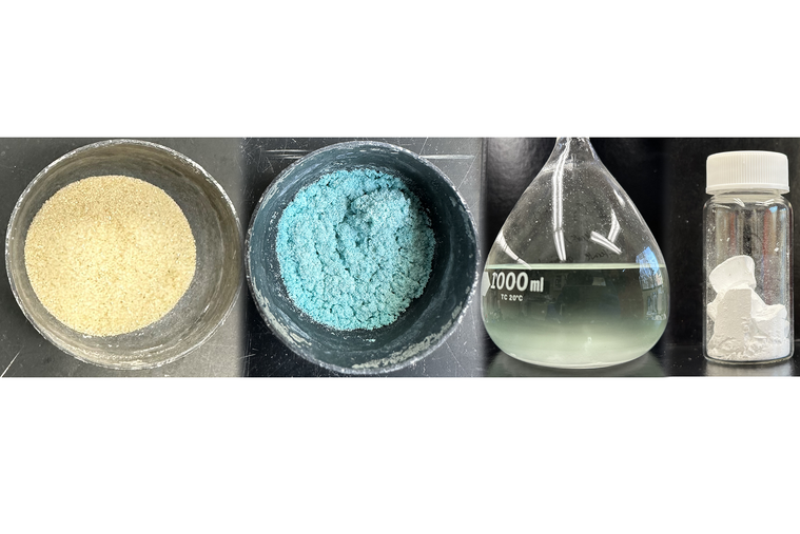
The new method for rapid low energy lithium extraction, uses common materials like sodium hydroxide and water. The former is the same compound used in making soap and many household cleaners.
“Our method operates at much lower temperatures than traditional techniques,” a team member explains. “That makes it not just cleaner and faster, but easier to implement at scale.
“We found that mixing the lithium-containing mineral called spodumene, with sodium hydroxide at relatively low temperatures, converts the mineral into lithium-bearing water-soluble phases.”
Then the team used a microwave to trigger a low-temperature reaction, producing highly soluble lithium sodium silicate. The lithium leached out of this brew within a minute. Finally, they added another compound that solidified the lithium for easy collection.
More Information
Lithium Extraction From Marcellus Shale
Extracting Lithium from Alberta Oil Field Waste
Preview Image: Materials Use in New Procedure