Conventional wisdom holds that fast charging a battery can lead to battery failure. Researchers at Woodruff School of Mechanical Engineering in Georgia, discovered something that challenges this assumption. They are convinced that fast charging actually benefits zinc-ion batteries, and they have evidence to prove this.
How Zinc-Ion Batteries Benefit From Fast Charging
This discovery opens the possibility of longer-lasting, cheaper batteries for consumer use, and supporting grids too. Zinc-ion batteries use zinc ions instead of lithium ions, making them safer and more affordable:
- Zinc is one of the most abundant materials on Earth, and many countries mine it.
- The metal is also meaningfully cheaper than lithium, which is less readily available.
- Unlike lithium, zinc is stable and does not burn. This is a critical safety benefit.
- Zinc is also less toxic, safer, and easier to recycle than lithium-based materials.
The catch until now has been sharp metal dendrites forming on zinc anodes while recharging zinc-ion batteries. These needle points can reach across to the cathode through the electrolyte, and short-circuit the battery.
Something Different Happened When They Tried
“We found that using faster charging actually suppresses dendrite formation instead of accelerating it,” the researchers explain. “It’s a very different behavior than what we see in lithium-ion batteries.” Fast charging benefits zinc-ion batteries.
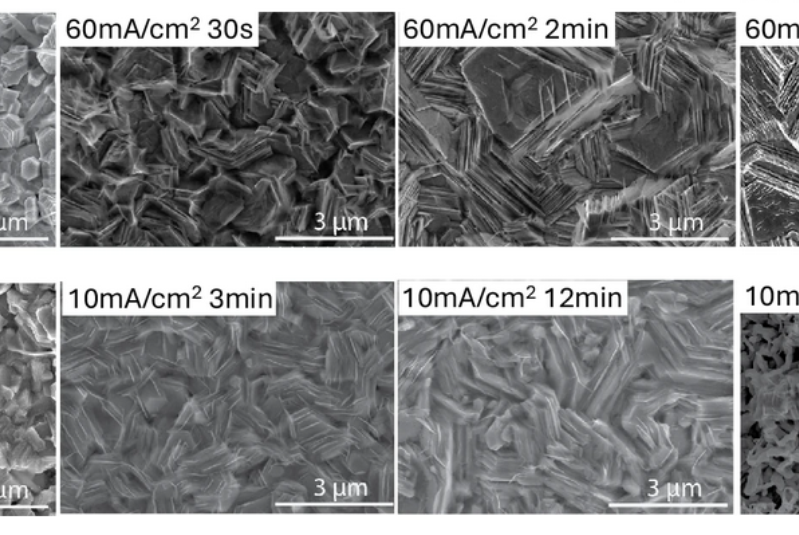
The Georgia report that we link to below, details how zinc deposits in smooth, compact layers on the anode during fast recharging. This phenomenon avoids short circuiting, and it also helps the battery last longer.
“It goes against conventional thinking that fast charging shortens zinc-ion battery life,” the report continues. “What we found expands our understanding of fast charging. This could rewrite how we think about battery design, and where and how we can use them.”
More Information
Novel Current Collector for Zinc-Ion Batteries
Aqueous Zinc-ion Batteries Back on Table
Preview Image: Zinc Depositing in Layers