Our human bodies use electrolytes containing electrical charges, to maintain our nerves, muscles, and levels of hydration. These electrolytes include sodium, potassium, magnesium, and phosphate, all that we take as supplements. Argonne National Laboratory has published a press release referring to electrolyte additives as ‘battery medicine’. They base this analogy on solid science that we link to below.
Batteries Use Electrolyte Additives As ‘Medicine’
Batteries, the Argonne scientists assure us, require ‘medicine’ to help them perform at their best. In this instance, the active materials come in the form of electrolyte additives.
These ‘supplements’ help electrolytes form stable interfaces, lower internal resistance, and store more electrical energy. The challenge is prescribing the right dose of electrolyte additives for effective battery ‘treatment’.
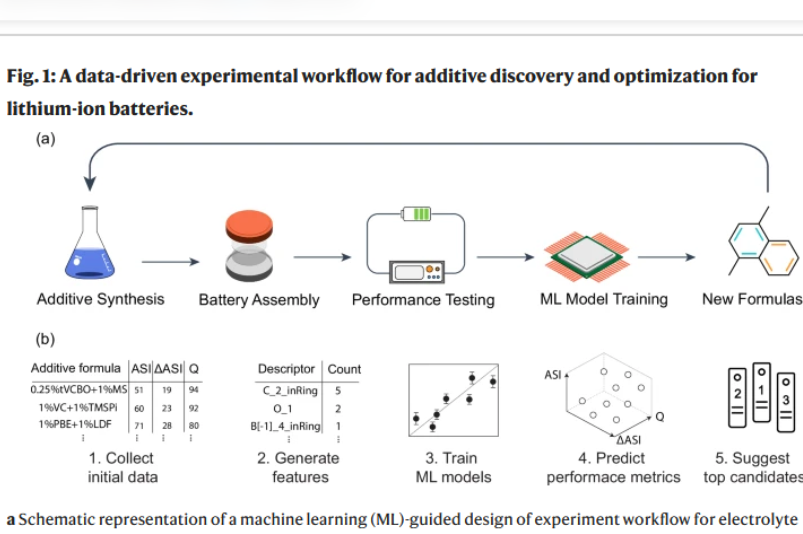
Resolving this issue has been a challenge on account of the huge number of possibilities, and the time it takes to sift through them. This is why the Argonne scientists turned to machine learning to predict outcomes.
Machine Learning Singles Out Effective Additives
The Argonne National Laboratory scientists combined the powers of machine learning, with traditional experimental testing. This model “quickly identified effective electrolyte additives, accelerating the discovery process compared with conventional methods”.
Quite soon, the team had a short list of electrolyte additives, that performed better than traditional alternatives. This result once again demonstrates the effectiveness of data-driven research techniques.
Using Battery Electrolyte Supplements In Practice
LNMO batteries containing lithium, nickel, manganese and oxygen, deliver an impressive 5 volts. They also have excellent energy storage capacity without requiring cobalt, but there is a catch. This combination makes the LNMO battery electrolyte unstable inside.
“The combination presents numerous challenges,” the scientists concede. “Because the electrolyte and cathode are in a highly energized state, that can lead to decomposition.” However, the team found an additive that rapidly decomposed, forming stable interfaces at both battery electrodes.
“Think of an additive like medicine,” the lead author adds. Using electrolyte additives as battery medicine opens the doors to new possibilities, thanks to the power of human imagination paired with machine learning.
More Information
Boron Improves Lithium Battery Efficiency
From Imported Rare Earth to Recovered Asset
Preview Image: Data Driven Electrolyte Design