A battery may look like a simple container, but inside it is a carefully designed chemical system. It converts stored chemical energy into electrical energy. That’s what actually happens inside a battery.
Most Batteries Contain Three Essential Components
Most batteries contain three essential components: two electrodes and an electrolyte. We call the electrodes the anode and cathode, while the electrolyte allows ions to move between them.
When a battery powers a device, chemical reactions cause electrons to travel through the external circuit. This flow of electrons is the electric current that operates a torch, powers a radio or starts a vehicle.
At The Same Time, Ions Move Through The Electrolyte
At the same time, ions move through the electrolyte to maintain electrical balance inside the battery. The exact reactions depend on the battery’s chemistry.
Consider a Lead-Acid Battery, Commonly Used In Backup
Consider a lead-acid battery, commonly used in cars and backup power systems. Its positive plates contain lead dioxide, its negative plates contain lead, while its electrolyte is dilute sulfuric acid.
During discharge, both plates gradually form lead sulphate as the battery supplies electricity. The chemical composition of the electrolyte also changes. That’s what actually happens inside the battery.
When the battery recharges, an external power source drives the reactions in the opposite direction, restoring much of the original chemical condition.
Other Battery Types Work Differently
Other battery types work differently. Lithium-ion batteries, for example, move lithium ions between their electrodes during charging and discharging.
A battery’s voltage depends largely on its chemistry and construction. Its capacity indicates how much electric charge it can deliver under specified conditions, while its energy capacity is commonly expressed in watt-hours.
Batteries are therefore not little containers filled with electricity. They store energy in chemical form and release it through controlled electrochemical reactions.
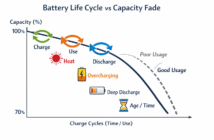
Understanding this simple principle helps explain why batteries differ in size, performance, charging requirements and useful life.
More Information