Let’s move on and discover how silver-zinc batteries work. A silver-zinc battery converts chemical energy into electrical energy. Its two principal active materials are a silver-based positive electrode and a zinc-based negative electrode.
Like Other Batteries, It Also Requires An Electrolyte
Like other batteries, it also requires an electrolyte and a separator. The electrolyte is usually an alkaline solution, commonly potassium hydroxide. This allows ions to move inside the cell, while the separator keeps the electrodes apart and helps prevent internal short circuits.
The positive electrode contains silver oxides, while the negative electrode contains zinc. The precise composition changes during operation.
- When the battery supplies electricity, zinc undergoes oxidation at the negative electrode, releasing electrons into the external circuit.
- These electrons travel through the connected device, providing the electrical energy needed to operate it.
- At the positive electrode, silver oxide undergoes reduction as part of the corresponding chemical reaction.
The movement of ions through the electrolyte completes the internal electrical process. That explains nicely how silver-zinc batteries work.
The Two Electrode Reactions Work Together
The two electrode reactions work together. Neither electrode could provide the same useful output independently, because the battery depends on the chemical changes occurring at both sides.
- During discharge, the active materials gradually change into their discharged forms.
- When a rechargeable silver-zinc battery is connected to a suitable charger, an external electrical supply drives the reactions in the opposite direction.
However Recharging Is Not Perfectly Reversible
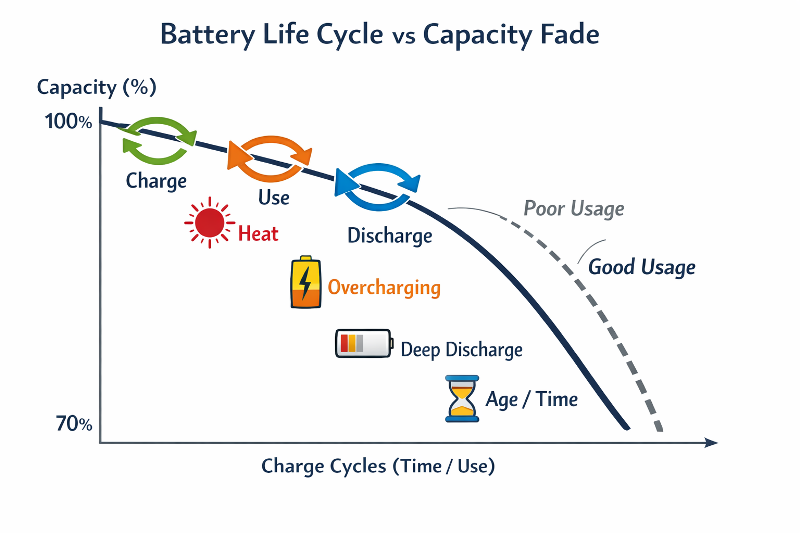
However, recharging is not perfectly reversible in practice. Unwanted reactions, changes in electrode structure and the movement of silver-containing material can gradually reduce performance.
One of the chemistry’s most important advantages is its high energy output relative to its weight and volume. It can also deliver substantial power when equipment demands a strong electrical supply.
These Characteristics Make Silver-Zinc Batteries Attractive
These characteristics make silver-zinc batteries attractive for specialized applications where compactness and performance are priorities.
More Information