
There is nothing new about tidal power. In 19th Century East Sussex a village called Tidal Mills grew up around a tidal mill grinding corn to flour. It might still be there had not the River Ouse moved its estuary. Nowadays, only a few ruins remain to remind us of the potential in the ocean.
A Fresh Approach to Tidal Power in Swansea
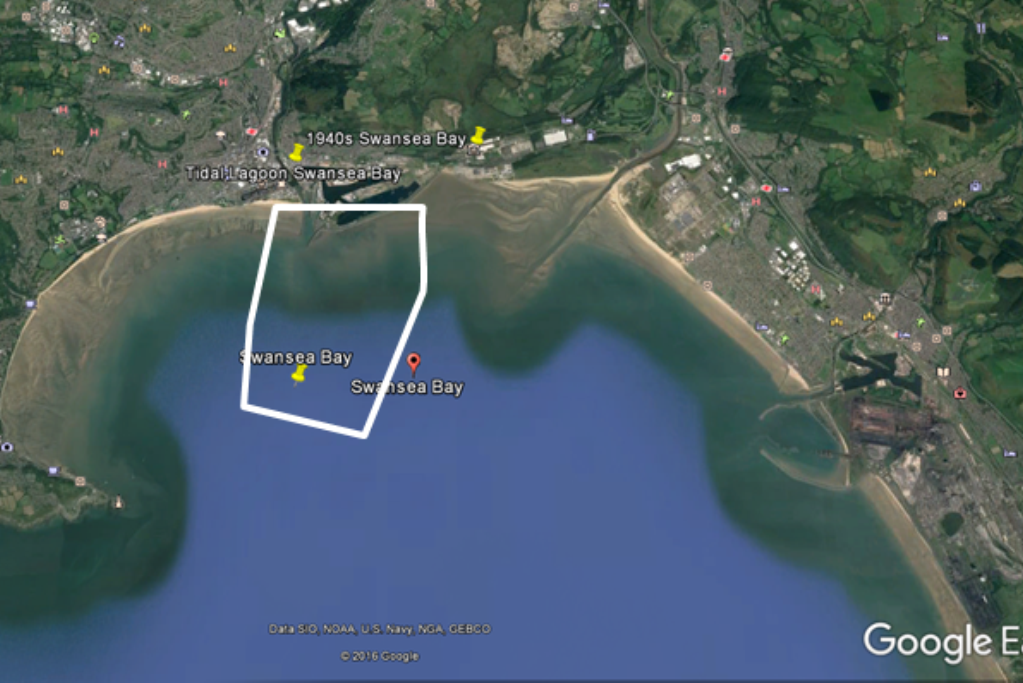
Former UK energy minister Charles Hendry has released a report that already has development consent. He wants to build a roughly u-shaped breakwater in Swansea Bay to generate electricity from the tide. Because the tidal differences are massive there.
Thus with turbine gates closed the height difference in the artificial lagoon should reach over four meters in three hours. When the gates open, the water leaves through sixteen, sixty-metre draught tubes. There it rotates the blades of sixteen, seven-meter diameter turbines to generate electricity from tidal power.
https://www.youtube.com/watch?v=1NF007w8qeg
Charles Hendry envisages a ‘fleet’ of similar tidal power projects. These will be at Wales’ Colwyn, Cardiff Bay and Newport, at Somerset’s Bridgewater Bay, and in West Cumbria north of Workington. “One of the great advantages,” he says, “is it completely predictable for all time to come. We know exactly when the spring tides and leap tides are going to be every single day for the rest of time.”
The Social Benefits of Using Tidal Power
The socioeconomic impacts are impressive. Moreover, the Cardiff tidal dam alone could supply enough electricity for the whole of Wales (population three million). With a lifespan of 90 years, the megawatt cost will be £89.90, compared to £92.50 for the new Hinkley nuclear power station.
The cherry on the top is the tidal power source is infinitely renewable. There is no radiation waste, and no spent fuel to deal with. The Cardiff project is a test one to assess the environmental impact. This is likely to be low so thumbs up to it for success.
Related
The Power of the Ocean Draws Tantalizingly Closer