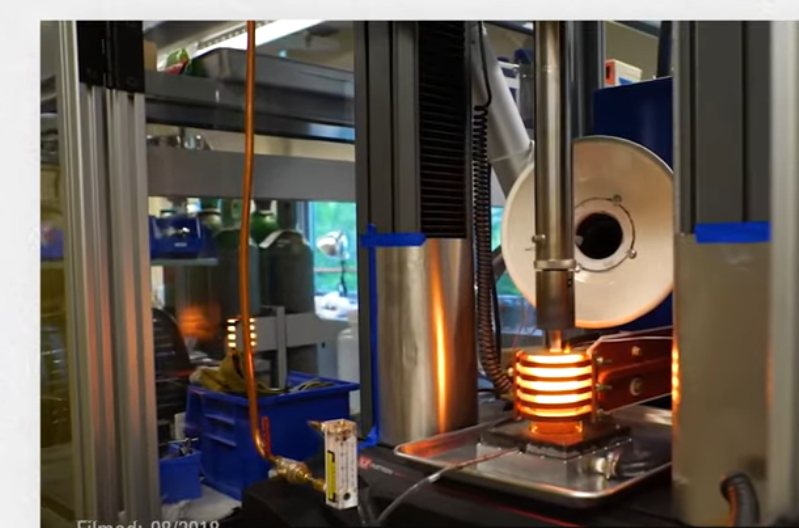
We could debate that civilization is a process whereby we reach an advanced stage of social, and cultural development. If so, then we might be at a tipping point as our expanding population pumps more carbon into Earth’s atmosphere. We pause for a battery moment (and a video) with researchers from University of Michigan in their advanced research laboratory.
A Critical Moment For Batteries in Time
The Michigan researchers are in a critical space, as they strive to contribute to a sustainable energy future. They see batteries at the heart of that transition. Things would be even better, they believe, if we had something superior to lithium-ion.
A further improvement in technology could really accelerate universal adoption of electric transport. Although this would require extending average driving ranges from 400 to 1,000 miles. Now that would be a battery moment we long to see in our lifetime!
Professor Jeff Sakamoto leads the team at University of Michigan, and works closely with U.S. Department of Energy. He is a man with a passion for batteries. His vision expands to include decarbonizing air transport.
To the Prof’s mind, lithium-ion will never get us there. The best versions achieve 200 units capacity, but he is aiming at 350. We would need a more powerful, more affordable, more stable battery to achieve that!
This Adds Momentum to Solid-State Batteries
The University of Michigan team is focusing their attention on the anodes, cathodes and electrolytes of solid state batteries. The electrolyte is the most important of these, they believe. That’s because it allows the ions to flow while batteries charge and discharge.
Their work points us in the direction of solid-state, fast-ion-conducting ceramic electrolytes that could become the ‘holy grail’ of batteries in future. There are still challenges to overcome, but the technology could deliver those 1,000-mile driving ranges after we resolve them.
More Information
Solid State Could Side-Step Lithium-Ion
Solid Ceramic Electrolytes For Our Future