A biodegradable battery decays naturally over time, making it suitable for robotics, and temporary medical devices. Non-degradable batteries can take a hundred years to break down, and leech their chemicals into the environment around them. Scientists at EMPA (Swiss Federal Laboratories for Materials Science and Technology) have used a living fungus for a biodegradable battery that we could even eat!
A Biodegradable Battery From a Living Fungus
The idea of creating biodegradable batteries that are commercially effective, is an ambitious one that continues to challenge scientists. Tech Radar explains how success could reduce the environmental impact of batteries. However, with this comes uncertainty regarding the batteries’ reliability and operating life.
“Biodegradable materials always react to their environment,” explains an EMPA team member, “We want to find a living fungus for a biodegradable battery, where this interaction is not a hindrance, but maybe even an advantage.”
Fungi, including mushrooms and mold, are living organisms that decompose and absorb organic matter. They play an essential role in breaking down, and recycling nutritious materials in dead plants. Some even have mutually-beneficial symbiotic relationships with living host animals and plants.
Redeploying Biodegradable Mycelia in Split-Gill Mushrooms
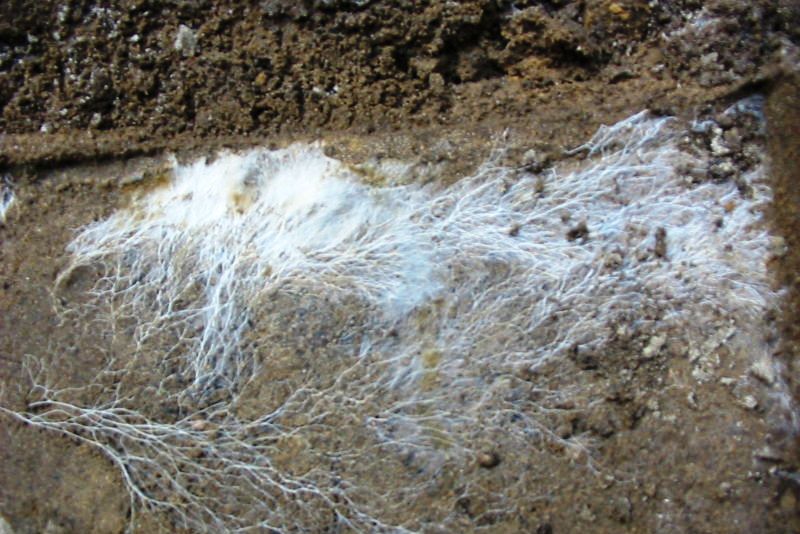
Mycelia are root-like structures of fungi, comprising a mass of branching, entangled threads. Wikipedia advises that these threads, “show strong potential for structural applications. They also have much higher strength-to-weight ratios than conventional materials, due primarily to low density.”
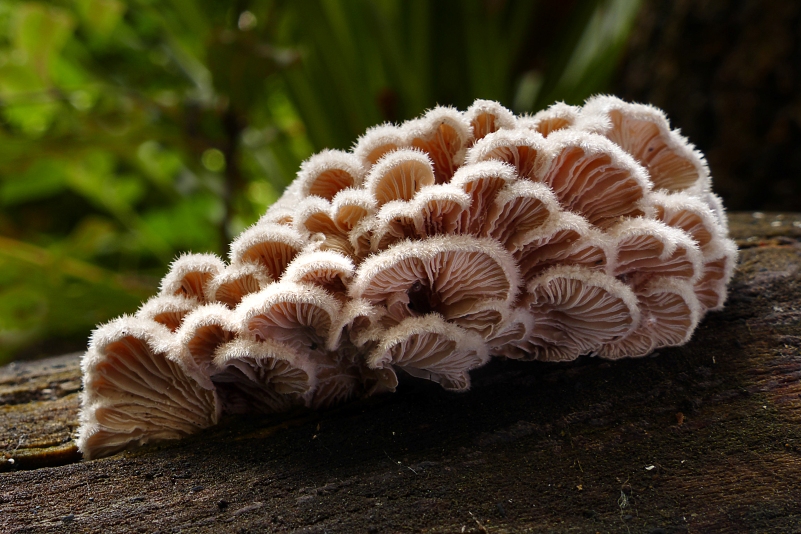
The EMPA team decided to use the mycelia roots from split-gill mushrooms for their experiment, but without chemically processing them first. “The fungus uses this extracellular matrix to give itself structure and other functional properties. Why shouldn’t we do the same”, query the researchers.
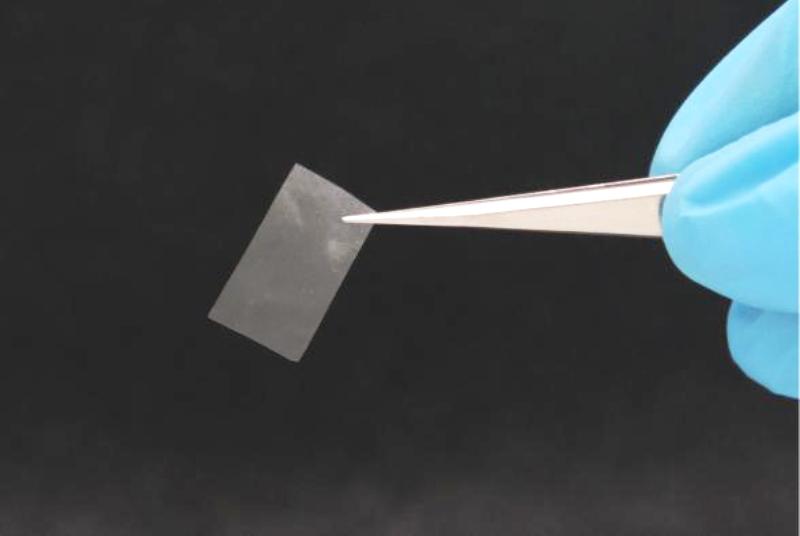
They created an emulsion of the fungus and its extracellular root matrix. The result was able to decompose, without releasing harmful waste. It also showed potential as a material that may suit applications in sustainable battery technology. The EMPA researchers are now testing it for tensile strength.
More Information
Fungal Batteries To Feed Not Recharge
Biodegradable Battery for Medical Use