___We expect a metal to be a smooth, hard object, and a gel to have jelly-like consistency. Scientists at Texas A&M University have turned this expectation on its head. They have created a metal gel that defies logic, because it is a jelly-like metal. Battery scientists are excited about this too, because this discovery could change the rules of the game for energy storage.
How They Changed a Metal Into a Gel
The Texas A&M University team began with the background that a gel is a semi-solid material. But it contains an ‘organic backbone” that prevents the gel flowing all over the place at room temperature.
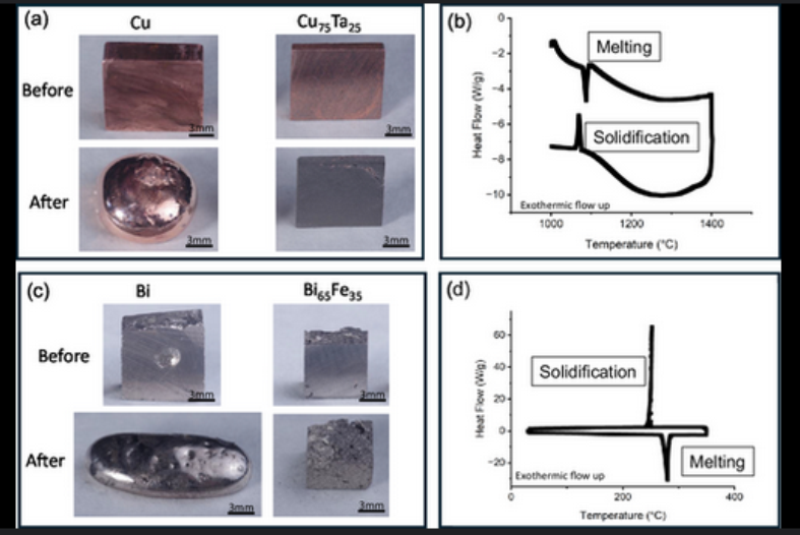
The Texas researchers created a metal gel that defies logic, by mixing two metal powders together. When they heated this to a very high temperature, one metal melted.
But the other metal remained solid and turned into a microscopic support structure. The net result was a metal ‘gel’ that looked solid from the outside, but contained a liquid inside.
“Metallic gels have never been reported before,” the research leader told Tech Explore. “This is probably because no one thought liquid metals could be supported by an internal, ultra-fine skeleton.
“What’s surprising in this case is that when the majority component – copper – melted into liquid, it didn’t just collapse into a puddle. That’s what pure copper would have done.”
This Jelly-Like Metal Could Revolutionize Batteries
Metallic gels containing highly-reactive metals like copper, could make great electrodes in liquid metal batteries. That’s because they should bond easily with other materials, resulting in a more efficient battery.
Liquid metal batteries store and release large amounts of electricity. They perform well in stationery applications, but can’t move around because this disturbs the liquid battery interior, perhaps even leading to a short circuit.
The Texas A&M University metal gel that defies logic could open the door to using liquid metal batteries in ocean transport. The team tested a small prototype using their gel. It performed successfully, and the electrodes retained their shape.
More Information
Why Lithium Metal Batteries Fade Away
Preview Image: Shape Preserving Metal Gels