Medical scientists have been discovering more about the aspergillosis fungus, which is quite common in the outdoor environment. In fact, it frequently occurs in compost heaps, air vents, and airborne dust and so we can’t really avoid. U.S. Centers for Disease Control reports an association between aspergillosis fungal infections and COVID-19. But you may wish to stop reading here if you prefer not to know about these things
Infection Occurs After Inhaling the Fungus from the Air
The Merck Manual says we often inhale the fungus spores every day, without being affected. However, if our immune system is weak for whatever reason, then the fungus can take hold. A ball of fibers, blood clots, and white blood cells may form in our lungs or sinuses. We may develop a fever, chest pain, and have difficulty breathing.
That said, doctors can cure the infection with anti-fungal treatments, although on rare occasions surgery may be necessary. We therefore need to get this done soon, before the fungus infects our liver or kidneys, causing them to malfunction. A recent discovery reveals the aspergillosis fungus can also infect people without weakened immune systems.
The Link between Aspergillosis Fungal Infections and COVID-19
U.S. Centers for Disease Control advises aspergillosis fungus is now showing up more frequently in people with severe respiratory infections. This has historically occurred in those with severe influenza. However, the infection has also recently shown up in patients with severe COVID-19, who are on ventilators.
This is not sufficient reason to panic about a new threat. Respiratory diseases are probably under more intense scrutiny than ever before. We should welcome the discovery of the link between aspergillosis fungal infections and COVID-19. That’s because our medical scientists now have the opportunity to tackle the challenge, and improve their treatments.
Related
AI Predicted Respiratory Disease Developing
Mucormycosis Maiming Indian COVID Patients
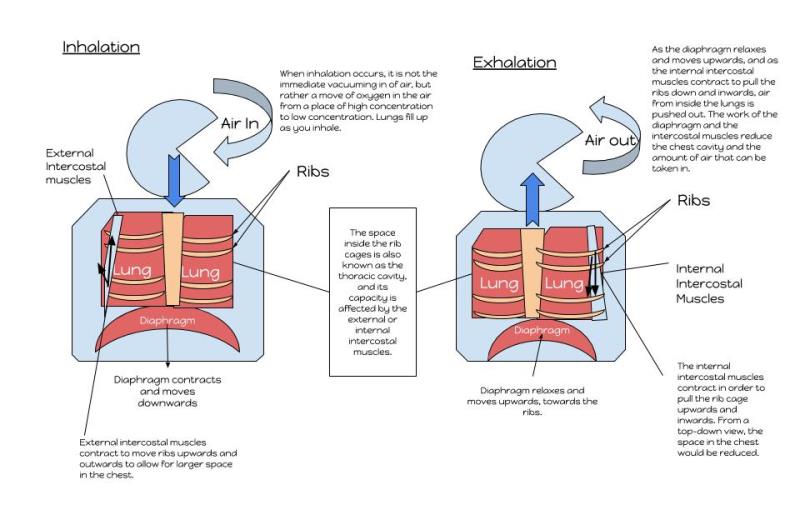
Preview Image: Diagram of Inhalation and Exhalation