Scientists at Nankai University in China, have discovered that boron enhances lithium battery efficiency. Boron achieves this at the cathode interface with the liquid electrolyte. It facilitates the creation of a robust interphase layer. This in turn counters dendrite formation, reducing inefficient ion transfer and short cycle life.
How Does Boron Improve Lithium-Ion Cycle Life?
Boron is a chemical element that has many industrial applications. Nankai University is active in boron research, especially relating to materials science and sustainable energy. University researchers there previously studied boron doping coating of battery materials.
Interesting Engineering explains how the researchers concluded that their solution lay in reformulating the electrolyte. This is a known, cost-effective way of improving round trip coulombic efficiency, and extending battery life.
The team already knew that boron has a strong electron deficiency. By experimenting, they discovered this factor reduced resistance to the transfer of ions in lithium-ion batteries. This, in a nut-shell is how boron enhances lithium ion battery coulombic efficiency, so these batteries last longer.
A Better Lithium-Ion Future With Boron
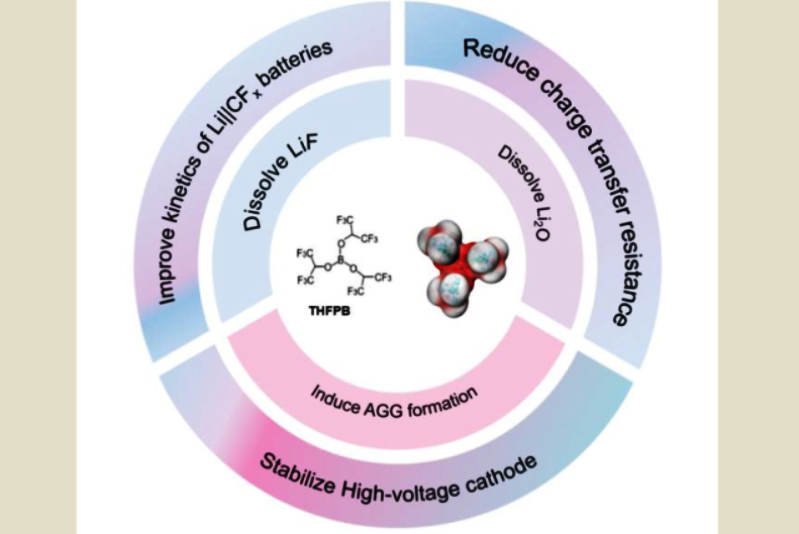
The researchers explored four boron additives, which they rated by their electrostatic potential. The additives they chose all performed well across these dimensions:
- Strong electrostatic potential helped dissolve the lithium dioxide, reducing charge-shuttling resistance.
- This in turn improved battery discharge capacity, and enhanced high rate performance.
- The oxidative decomposition facilitated a robust cathode interphase, and long cycling stability.
In these three ways, boron enhances lithium ion battery performance in a university laboratory. However, this does not necessarily mean we shall see better lithium-ion batteries soon in our shops. Success will depend on the availability of cash, to fund commercial development.
More Information
Topping Up The Ions in Lithium-Ion Batteries
Quantitatively Mapping Lithium-Ion Electrolyte