Lithium-ion-phosphate batteries (LFP) are not as powerful as other lithium batteries, containing minerals such as nickel, manganese, and cobalt. The lack of these relatively scarce minerals currently makes LFP battery recycling less economically attractive. But University of Wisconsin scientists have found a way of cost effectively recycling LFP batteries, that could make the process affordable.
Rationale for Using Cost-Effective LFP EV Chemistry
Electric vehicle manufacturers (EV) are caught in a double bind when it comes to choosing the best battery chemistry. Lithium-ion batteries provide a superior driving range, although their high cost dampens purchaser enthusiasm.
Lithium-iron-phosphate chemistry delivers a cheaper battery, but at the cost of a shorter driving range. None the less America’s Tesla, and China’s BYD have both concluded that LFP battery chemistry is the best compromise.
The European Union already mandates a percentage of recycled lithium in new EV batteries from 2031 going forward. This policy increases the urgency of finding a way of cost effectively recycling LFP batteries economically.
The new direction taken by BYD and Tesla will inevitably lead to a growing pile of spent LFP EV batteries, that currently do not recycle affordably. The University of Wisconsin scientists have taken up the challenge.
Their Way to Recycle Lithium-Iron-Phosphate Batteries
The team at University of Wisconsin use electrochemistry to recover lithium from spent lithium-iron-phosphate batteries. This is a step away from the current method of applying “energy-intensive heat, or an extensive series of steps that consume a lot of chemicals and generate significant waste”.
Here’s a diagram of the method the researchers developed as reported here:
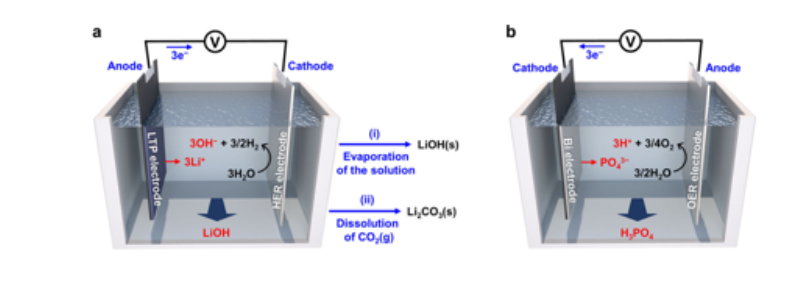
The two-state process the researchers adopted above works as follows:
- First, they leach out lithium ions from LFP batteries, and then selectively extract them with a lithium-ion storage electrode.
- Then, they release the extracted lithium ions into a separate solution, and recover them as high-purity lithium chemicals.
We understand that battery and electrical vehicle manufacturers are already eyeing this imaginative process, over which, we note, the researchers already hold several patents.
More Information
Different Types of Lithium-Ion Batteries
Lithium Iron Phosphate Design Saves Trees
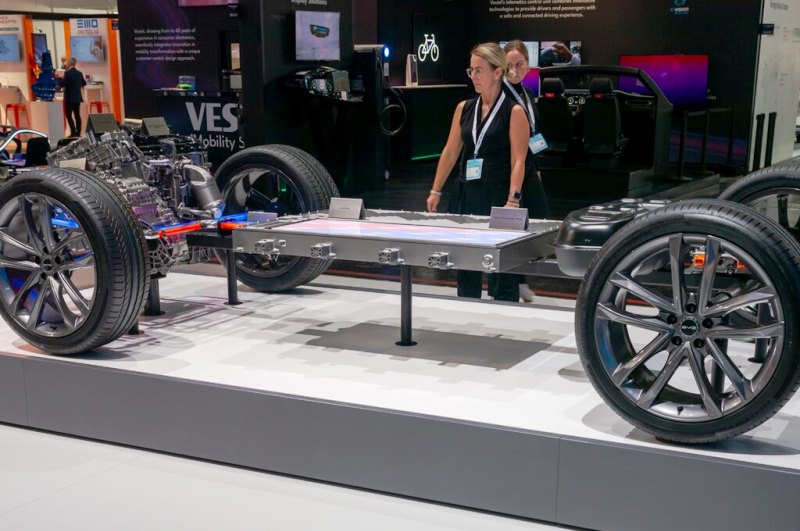
Preview Image: BYD LFP Blade Battery