Primary zinc-air batteries, as the name suggests, have alkaline electrolytes and negative zinc anodes, but use air as their positive cathodes. The rechargeable fuel cell alternative generates electricity by the reaction between oxygen and zinc pellets in a liquid alkaline electrolyte. Battery scientists have wondered could zinc-air batteries replace lithium-ion ones for quite some time. Fresh research confirms this is a distinct possibility.
Edith Cowan Researchers Redesign Zinc-Air Batteries
Edith Cowan University offers undergraduate and postgraduate courses, and research opportunities at its campus in Perth, Western Australia. A study team there claims to have redesigned zinc-air storage batteries, to the extent they challenge lithium-ion chemistry even in electric vehicles.
“The new design has been so efficient it suppressed the internal resistance of batteries,” research lead Muhammad Rizwan Azhar claims. “And the [output]voltage was close to the theoretical voltage, which resulted in a high-peak-power density and ultra-long stability”. But could zinc-air batteries really trump lithium-ion outside a laboratory?
Rechargeable Zinc-Air Technology Proves More Effective
Zinc-air chemistry has been historically flawed, because its air electrode and short-lifespan limit its effectiveness. And this in turn renders it only a distant competitor to lithium-ion, although PV Magazine suggests this could be about to change.
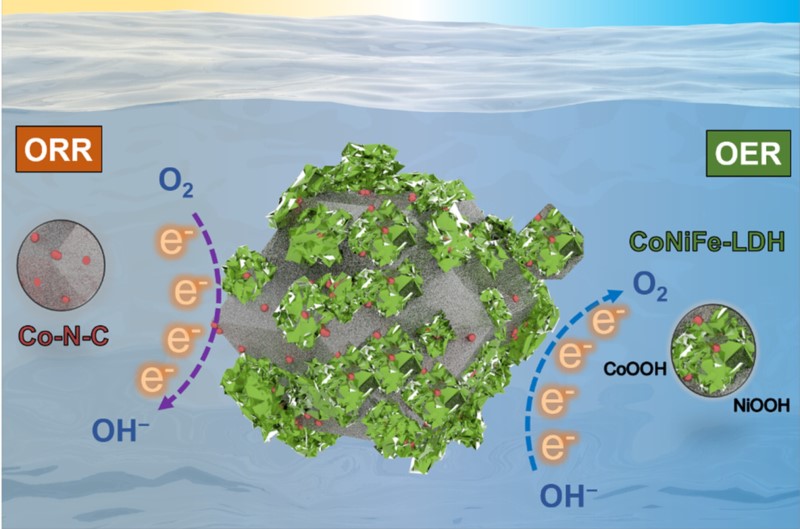
That’s because, as it says, the Edith Cowan University team used a combination of new materials, “such as carbon, cheaper iron and cobalt based minerals,” to overcome these issues. And this fresh approach could even make zinc-air batteries “a better alternative to lithium” according to the research report.
But Could Zinc-Air Batteries Also Capitalize on Price?
There was always going to be a compromise between capacity, density, and cost in the world of batteries. “Rechargeable zinc-air batteries are becoming more appealing,” says Azhar. “Because of their low cost, environmental friendliness, high theoretical energy density, and inherent safety.”
Lithium-ion batteries have the inherent disadvantage of relying on high-cost and finite resources, and have safety issues too. There is an increasing need for safer, more cost-effective, and high-performance battery systems, that surpass the capabilities of lithium-ion batteries, the research team leader believes.
More Information
Zinc-Air Batteries With Dual Electrolyte