Why does science appear to ignore COVID-19’s disruption of menstrual periods, asks Bella Mackie writing in Vogue Magazine. Is this a sexism thing, she wonders in a male-dominated world? We decided those were excellent questions to answer, and dedicated this post to unpack the question. Because we learned Bella Mackie is no armchair journalist. She lived the symptom.
Bella Experienced COVID-19’s Disruption of Menstrual Periods Personally
Bella finally caught COVID quite recently, after a long, successful run of avoiding the infection. However, it was not the walk in the park she hoped for, because she spent two weeks in confinement, and emerged feeling ‘weak and weepy and fairly low on energy’.
That said, at least Bella had full vaccination and the satisfaction of not being hugely ill as she put it. But she was taken aback when she skipped her period, even though this is not uncommon after illness. Twelve days later the slightly concerned journalist decided to Google.
Bella found loads of women with similar experiences after COVID. Some reported heavy menstrual periods, while others had long and more painful ones. She had a similar response when she tweeted. Some women had PMS symptoms that lasted weeks without clear ends.
How Science Responded to Bella’s Inquiry When She Asked
When Bella researched the internet she discovered more than an illness can be behind a missed period. Stress, anxiety and depression can also cause it that may accompany two weeks in medical confinement.
She goes on to agree many other women will also have felt that way since January 2020, when the pandemic intruded in our lives. Several other women warned her the first post-COVID period can also be more painful and heavier than normal.
When we investigated further we learned from International Journal of Epidemiology that ‘questions about menstruation are absent from most large-scale COVID-19 studies’ leaving a knowledge gap. Like Bella we are curious to know why this is so.
Breaking News
Unvaccinated Heart Patients at Greater Risk
Inflammatory Multisystem Syndrome in Kids
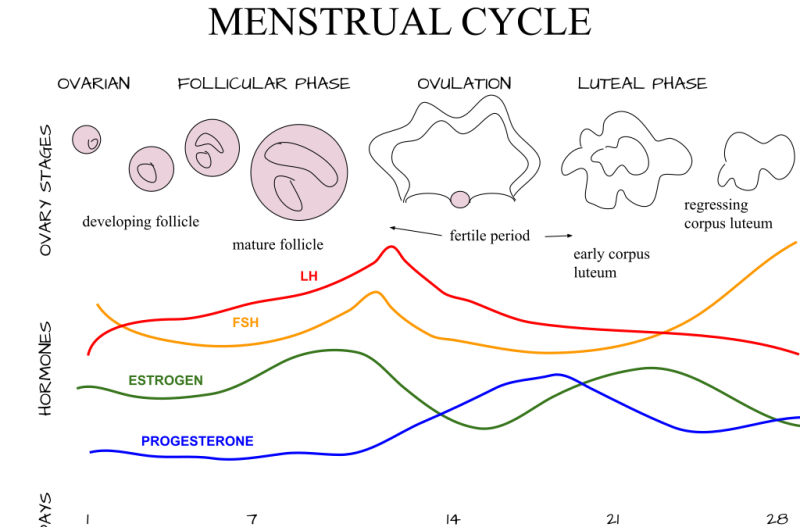
Preview Image: Menstrual Cycle Diagram
International Journal of Epidemiology Report
OVID-19’s disruption of menstrual periods, asks Bella Mackie writing in Vogue Magazine. Is this a sexism thing, she wonders in a male-dominated world? We decided these were excellent questions to answer, and dedicated this post to unpack the question. Because we learned Bella Mackie is no armchair journalist.
Bella Experienced COVID-19’s Disruption of Menstrual Periods Personally
Bella finally caught COVID quite recently, after a long, successful run of avoiding the infection. However, it was not the walk in the park she hoped for, because she spent two weeks in confinement, and emerged feeling ‘weak and weepy and fairly low on energy’.
That said, at least Bella had full vaccination and the satisfaction of not being hugely ill as she put it. But she was not happy when she skipped her period, even though this is not uncommon after illness. Twelve days later the slightly concerned journalist decided to Google.
Bella found loads of women with similar experiences after COVID. Some reported heavy periods, while others had long and more painful ones. She had a similar response when she tweeted. Some women has PMS symptoms that lasted weeks without clear ends.
How Science Responded to Bella’s Inquiry When She Asked
When Bella researched the internet she discovered more than a illness can be behind a missed period. Stress anxiety and depression can be behind it that could also accompany two weeks in medical confinement.
She goes on to agree many other women will also have felt that way since January 2020 when the pandemic intruded in our lives. Several other women warned her the first post-COVID can also be more painful and heavier than normal.
When we investigated further we learned on International Journal of Epidemiology that ‘questions about menstruation have been excluded from most large-scale COVID-19 studies’ leaving a knowledge gap. Like Bella we are curious to know why this is so.