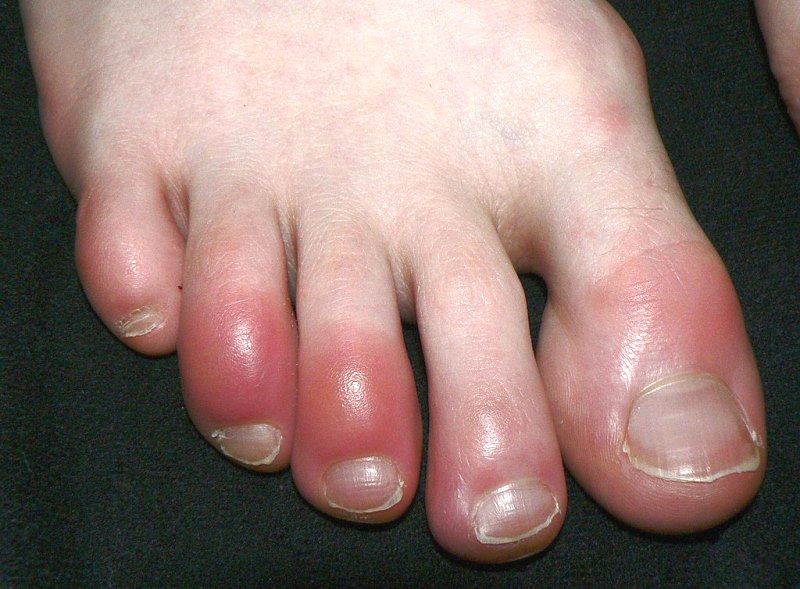
If you find yourself infected with the virus, your fingers and toes could become red and inflamed. And the appearance could be similar to a chilblain inflammation. However, there may be no need for concern according to scientists who published their work in Wiley Online Library. They label COVID Big Toe a result of an immune response to a coronavirus infection.
Lining Up and Comparing Chilblains and COVID Big Toe
Chilblains are a natural response to cold and humidity, especially among women. Small blood vessels in the skin take strain. This can lead to redness, itching, inflammation, and possibly blisters on hands, fingers, feet and toes. First line treatment involves avoiding cold damp environments, and wearing gloves and warm socks.
The researchers found similarities between chilblains and COVID Big Toe. Because they found both involved the body generating an immune response with high levels of certain auto antibodies. And furthermore those auto antibodies mistakenly targeted the host’s own cells and tissues, as well as the invading virus.
Assessing the Immune Response Resulting in COVID Big Toe
COVID Big Toe appeared in the first months of the epidemic, although low numbers made it an unofficial symptom. The Guardian describes its appearance as ‘red or purple lesions on the side or sole of the foot, or on hands and fingers’. A rash of self-healing cases appeared among children and adolescents in Italy in May 2020.
However, COVID Big Toe resulting from an immune response has been less frequent during Delta. Dr. Veronique Bataille, a consultant dermatologist and spokesperson for the British Skin Foundation may have the answer. She says the tailing-off many be down to vaccination, or ‘having some protection against COVID from past infections’.
Breaking News
Long COVID Stole The Life Joy of a Survivor
Secondary School Kids Need Vaccinations
Preview Image: Chilblains with Similar Appearance