Writing about batteries can be a humdrum experience, as each day we search for a new topic. But sometimes we come across a really great idea, like do batteries have a life of their own? This is an opportunity to take a flight of fancy grounded on science. Or, as Ed Conway writing in Material World says, a chance to collide with poetry.
Batteries Behaving As If They Have a Life of Their Own
If we plug in our phone or laptop to charge it, we may notice the part where the battery is becoming warmer, as is if it is stirring. Although we will probably be unaware that the battery is swelling very slightly at the same time, as it tops up its energy. This swelling will gradually subside as the battery discharges again.
It’s actually quite mind-blowing to imagine batteries behaving this way, in Ed Conway’s flight of fancy. Although their pulsing, breathing almost in our imagination, actually has a logical explanation in the world of science.
The Life Of a Battery Through the Eye of Science
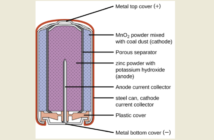
If we examine the idea, do batteries have a life of their own objectively through the eye of science, then we find a logical reason. Batteries store their power in electrically charged ions, in the case of our example probably lithium-ion ones:
- These ions are at rest at the cathode side of a battery, when that battery is flat.
- However, they migrate across to the anode side when we re charge the battery.
- When the ions reach their destination they enter the carbon layers at the anode.
- This ‘intercalation’ causes the carbon to expand slightly, and with it the battery.
Most times we can ignore this warming, expansion and contraction. However, if the warming and expansion becomes greater than usual, then we should turn the device off, and seek technical advice.
More Information
Lithium Battery Health and Safety