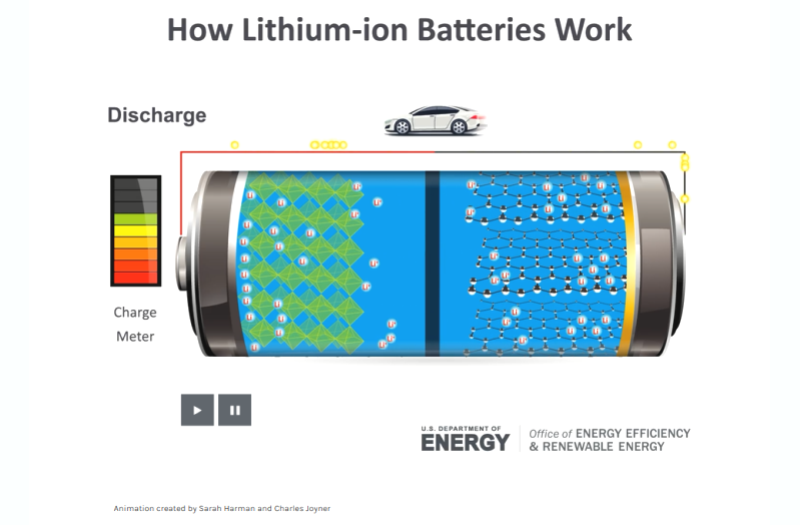
Electrical resistance is a measure of an object’s opposition to the flow of electricity, as measured in Ohms. The degree of opposition determines lithium-ion battery efficiency, performance, and usable lifetime. We explore the factors behind electrical resistance in lithium-ion batteries in this post. Understanding these may help you get more for your money from these storage devices.
Dimensions of Resistance In Lithium-Ion Batteries
Ohmic Resistance causes a loss in voltage, when charge-carrying ions cross boundaries between electrodes, electrolytes, and separators.
Polarization Resistance occurs during charging and discharging. It affects the energy conversion factor, and hence battery efficiency.
Factors Affecting Internal Lithium Battery Performance
Battery Electrolytes
Battery electrolyte affects internal resistance, depending on its composition. Electrolytes with high conductivity allow ions to flow more smoothly between electrodes. Electrolytes with lower conductivity increase internal battery resistance, and throttle ion flow.
Battery Separators
Battery separators also affect electrical resistance in lithium-ion batteries, according to the Ufine Blog. Their degree of resistance as opposed to their permeability, restricts or facilitates the flow of ions.
Current Collectors
Current collectors are the points where batteries interface to external circuits, and with recharging devices. Their materials and design affect the transfer of electrons between the electrodes, and to and from the external entities.
Electrical Currents
Electrical currents can affect internal battery resistance too, depending on their direction and magnitude. Higher currents may generate more heat, and affect ion mobility too.
External Temperatures
External temperatures play a critical role in internal battery resistance, and performance. High temperatures may lower resistance, but throttle battery life. Low temperatures have the opposite effect, in that they slow ion movement.
Design and Manufacture Affect Lithium-Ion Resistance Too
Quality and thickness of electrode materials, and the manner of their assembly, also play a role in battery resistance and performance. We wrote this article to set in context the battery research we report in our blog.
More Information
Battery Resistance Opens a Window
Electrical Resistance : School Experiment