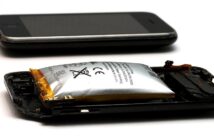
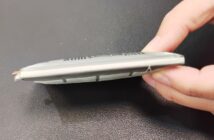
Battery life and driving range are the greatest impediments to the mass roll-out of electric vehicles. They may start out looking good, but then begin to degrade as individual cells malfunction. Now if we had EV batteries that repair themselves, this would be less of a challenge. But we are not there yet by far, despite all the research and development going on.
European Union Pursuing Self-Repairing EV Batteries
The European Union is funding research into self-repairing EV batteries, under its PHOENIX project. We rather like that name, because the Phoenix was a bird in Greek mythology that kept regenerating itself from its ashes.
We may tolerate replacing smartphone batteries every few years, but EV battery cost can be a deal-breaker putting purchasers off. No wonder the EU is pouring money into EV batteries that repair themselves.
Researchers from European Union member countries Belgium, Germany, Italy, Spain and Switzerland, are combining forces to achieve a vision. They are designing sensors inside lithium-ion batteries that detect age-related changes, and trigger self-healing.
“The idea is to double battery lifetime and reduce its carbon footprint,” a team member explains. “We envisage a battery that can repair itself, so that fewer resources are needed overall.”
Why The Need for Auto-Repairing EV Batteries Now?
Electric vehicle sales are not happening fast enough to meet global climate targets. We can blame social media and politics if we like, but the truth is EV batteries are not good enough yet, to fully compete with internal combustion motors.
The European Commission report that we link to below, explains how current battery management systems are inadequate. They only monitor voltage and temperature to control overheating, and promote safety, it explains. That’s why the PHOENIX project would like to see the following additional features:
- Advanced triggers and sensors that detect battery expansion, generate heat maps, and monitor dangerous gases.
- Automatic healing by squeezing the battery back into shape, or applying focused heat to trigger self-healing
“The idea is that under thermal treatment, some unique chemical bonding will bounce back,” a chemist explains. Another intriguing idea uses magnetic fields to break up dendrites, and avert short circuits and failures driving customers away.
More Information
Stretchable Self-Healing Lithium-Ion Batteries
A Wearable Battery That Self-Heals