Even just ten years ago, we used electrical energy as if it were an endless resource, to use freely as we wished. Nowadays, we know that we must use every scrap of it sparingly, for the sake of our planet. This challenge is particularly relevant for electrically-powered flight, where every ounce of battery weight matters. Perhaps we should start flying on batteries like birds in the sky, two researchers from Tokyo suggest.
Flying Like Birds, Not Fighting the Winds on Batteries
The air above our heads where birds fly, comprises rising thermals, shifting wind currents, and changing air pressure. If we ever experienced an air pocket on an airplane, then we have first-hand experience of what happens when we try to blunder our way through the forces of nature.
The pair of researchers from School of Engineering, Institute of Science, Tokyo, studied how hummingbirds adapt to air movements in nature. We are confident that this means that they use their energy efficiently, compared to forcing their way through the air as do airplanes.
What the pair of researchers discovered could be of great benefit to future aircraft flying on electricity stored in batteries. They could increase their flying range, while not increasing the weight of their energy storage. We are excited at the thought of efficiently flying on batteries like birds through the sky.
Artificial Hummingbird Wings to Detect Wind Direction
Researchers Kenta Kubota and Hiroto Tanaka from School of Engineering, Institute of Science, Tokyo suspected that insects and birds have ‘strain receptors’ on their wings.
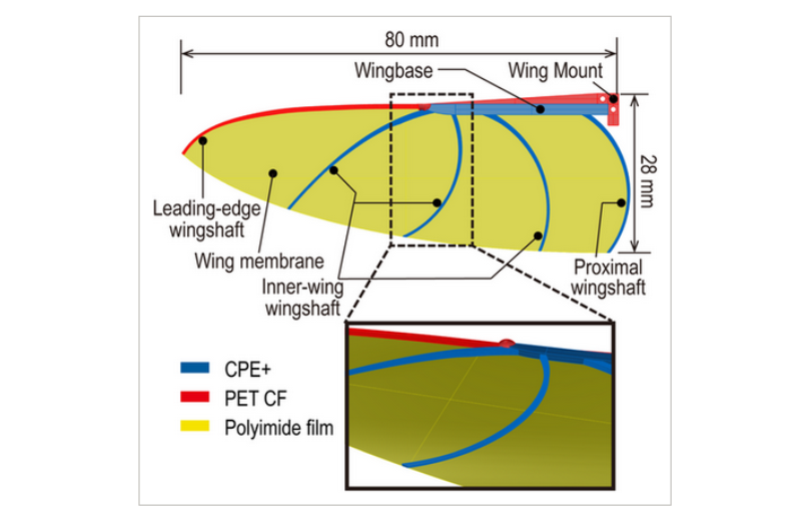
They set out to design an artificial hummingbird, that could be a precursor to airplanes in touch with the elements above and below. The artificial mechanical wings – with sensors attached – simulated flapping while hovering in a gentle wind tunnel.
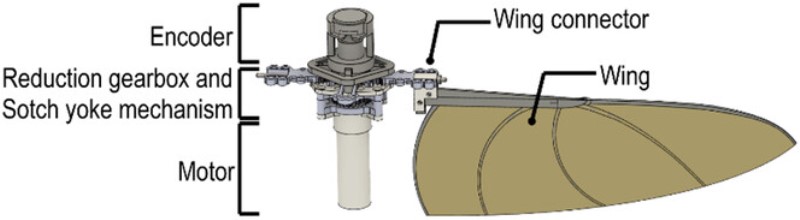
https://onlinelibrary.wiley.com/doi/10.1002/aisy.202400473
The results of this study suggest “that hovering animals determine the wind direction via strain sensing, which is useful for flight control. And that the implementation of wing strain sensors in flapping-wing aerial robots, may improve flight control ability.”
More Information
Passenger E-Flight Needs Better Batteries
Reinventing the Electric Machine for Flight