A virus causes COVID-19. This particular virus works largely the same way as others our science has conquered, or brought under control before. Therefore, it follows we should seek to understand the disease in the light of virus research generally, as opposed to it being a unique challenge. Today we share how HIV research adds to our COVID understanding.
HIV Research Adds to COVID Understanding During Opening Attack
Scientists at University of Virginia School of Medicine are seeking to understand how the HIV virus enters a human cell. That’s because this information would add to our understanding of the initial COVID infection too, and hence be of great value. They were using an electron microscope, but were encountering difficulties preparing research samples.
The researchers were having difficulty observing the exact moment an HIV virus invades a host human cell. But they realized their HIV research could add value to our understanding of how a COVID coronavirus infection starts as well. They therefore decided to use a process called cryo-electron microscopy. This received a Nobel Prize in Chemistry in 2017.
How Cryo-Electron Microscopy Works in Context of Viral Infections
Cryogenic electron microscopy observes samples frozen at very low temperatures in liquid ethane. Or cooled in a blend of liquid ethane and propane. This allows more accurate determination of bio-molecular structures at near-atomic resolution.
The team detached parts of a cell’s membrane to determine how HIV and other viruses begin their attacks. Freezing them preserved the moment of assault, and enabled them to understand the process better.
Observing that precise event brought them closer to ‘a molecular-level understanding of the dramatic rearrangements’. These are what proteins and lipids undergo as two membranes become one, and a virus begins its infectious cycle. As is the case with both HIV, and the COVID-19 pandemic taxing us right now.
Related
Public Health Risk of Rapid COVID-19 Tests
COVID May Start in the Mouth Study Confirms
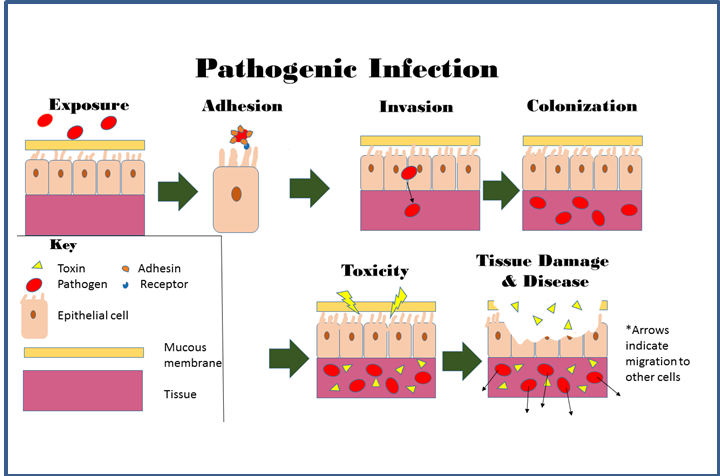
Preview Image: Stages of Pathogenic Infection