The word ‘hybrid’ comes from the Latin word hybrida, meaning the offspring of a tame sow and a wild boar. We find that quite apt, because green energy and fossil fuel are distant cousins too, although there is synergy between them. Hybrid electric cars made their appearance in the early 20th century, when gasoline and batteries were competing for the same market.
Hybrid Electric Cars Were a Sensible Proposition
Hybrid electric cars make a great team when low speed electric motor torque combines with gasoline’s compact energy storage. However, gasoline motors had their limitations in early days of automotive transport according to Edison Tech Center. Although clutches and gearboxes enabled them to automate smaller vehicles.
But this solution was mostly inadequate for larger trucks and locomotive buses, because constant pressure burned out clutches. And so those heavier vehicles often relied on electric motors, or hybrid combinations.
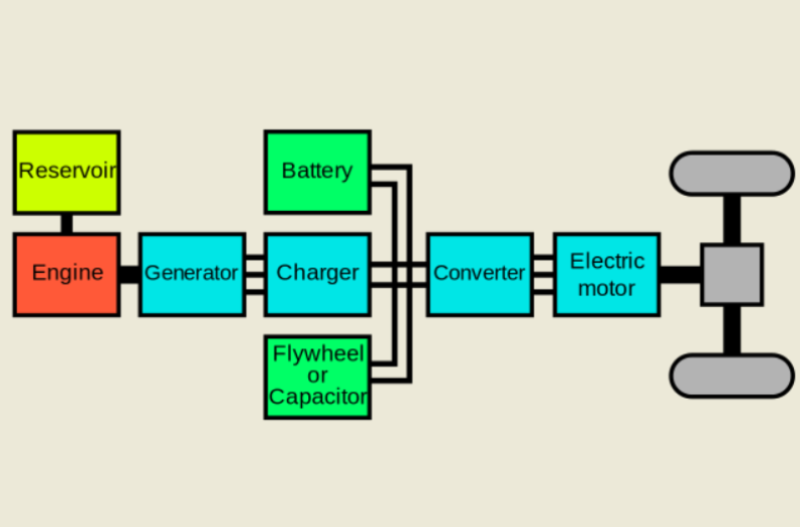
Two Varieties of Gasoline – Electric Hybrids
- In a series hybrid vehicle, a gasoline motor turns over at optimum revolutions connected to a dynamo. This dynamo in turn energizes one or more electric motors via a controller unit. While an auxiliary battery starts the gasoline motor and supplies electricity for the lights.
- Parallel hybrid electric cars combine gasoline and battery energy, often through the same drive train. This optimizes the balance between fuel efficiency and performance. The battery may recharge using regenerative energy from braking, or plug into an external source for replenishing.
A gasoline-dominated combination does most of the work, with the batteries kicking in as ‘superchargers’. Whereas a hybrid where electricity dominates, fires up the gasoline motor to extend its driving range. We explore several early 20th Century autos utilizing hybrid energy shortly.
More Information
Detroit Electric All American Runabout