The Massachusetts Fire Incident Reporting System coordinates information about fires across the state, in an effort to understand them better. The Department of Fire Services recently added a new tool to improve lithium-ion battery fire understanding. A recent GovTech report suggests laptop batteries feature in these incidents to a greater extent than previously imagined.
Laptop Batteries Playing an Increasing Role in Fires
Lithium-ion batteries energize many portable devices, freeing them from mainline utility supplies. We find them in phones, laptop computers, a myriad of other devices, and now electric cars too. The batteries are generally safe, although there are incidents where they do over-heat.
The most recent Massachusetts fire incident report suggests lithium-ion batteries played a role in sparking over 50 fires during 2023. This is more than twice the official average according to the national system, suggesting that the new data is more accurate.
The 50 lithium-ion battery fires Massachusetts Department of Fire Services investigated related to a variety of devices:
- Micro-mobility devices such such a e-bikes played a role in 9 fires.
- Cellphones and tablets were behind another 8 of these incidents.
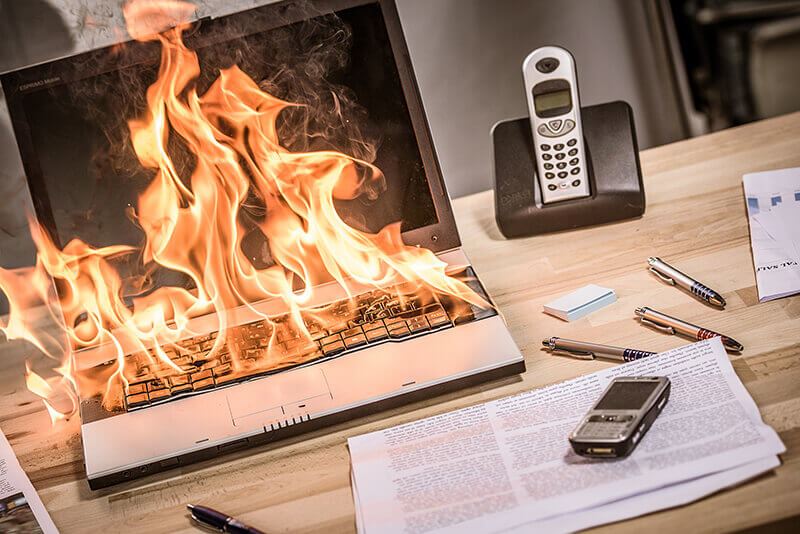
- But laptop batteries also played a role in 8 lithium-ion battery fires.
- While power tools were behind another six of these fiery incidents.
These incidents were spread out across 38 different Massachusetts communities.
Lithium Battery Fires Not Necessarily Starting During Charging
The information from Massachusetts Department of Fire Services includes the observation that not all these devices were charging at the time the fires occurred. This data was available in 41 of the 50 incidents included in the sample.
“We knew anecdotally that lithium-ion batteries were involved in more fires than the existing data suggests,” remarks State Fire Marshal Jon M. Davine. “In just the past six months, investigators using this simple checklist have revealed many more battery fires than we’ve seen in prior years.”
Some of the battery fires included in the data were secondary ones that did not spark the original incident. The report ends with recommending smoke alarms, using OEM batteries and charging equipment, and only charging one battery or device at a time.
More Information
Lithium-Ion Battery Fire Tracking System
Avoiding Home Battery Fires and Accidents