A research study by the Austrian International Institute for Applied Systems Analysis (IIASA) suggests using mountains as gigantic batteries. That’s because their mountainous batteries would use the power of gravity for energy storage. This is at the far end of the spectrum from the diamond batteries we discussed on November 18, 2019. Therefore we were interested to know more.
Mountain Gravity Energy Storage for Mountainous Batteries
The Institute’s Julian Hunt and his colleagues are focusing attention on areas with variable weather and relatively low energy demand. The Big Think says they have small islands in mind, and remote places that could get by with less than 20 megawatts energy storage.
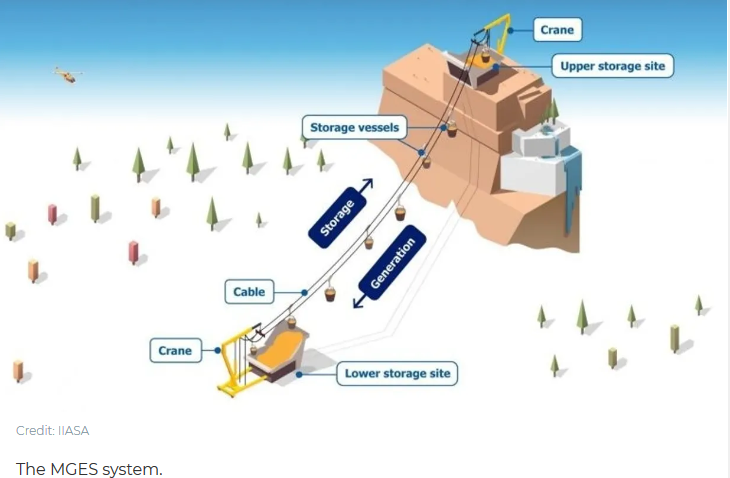
Julian Hint believes his mountainous batteries would be up to the task of backing up solar power. He imagines his mountain gravity energy system (MGES) moving gravel or sand from the bottom of a mountain to the top. It would work like a ski-lift transporting alpine sportspeople. A crane would winch the storage vessels containing gravel to the top of the mountain.
Lowering the Gravel Down Again Completes the Cycle
The weight of the material would combine with the force of gravity to operate an electricity generator. Thus, the quantity of stored energy would be a function of gravel mass, mountain height and gravity.
However, there would be some energy loss from loading and unloading the gravel or sand. But the balance would power the community via storage batteries when wind and sun were unavailable. Julian Hint prefers his method to hydro power because he says gravel and sand are cheaper than water.
The team is now searching locations in the Rocky Mountains, Hawaii, and Pacific islands with peaks suitable for mountainous batteries. However, the alpha site will be Hawaii’s Molokai Island, where they believe wind, solar, gravity and batteries will suffice.
Related
Gravitational Energy from Soil in Drums
Gravity Bricks Set to Store Energy in Milan
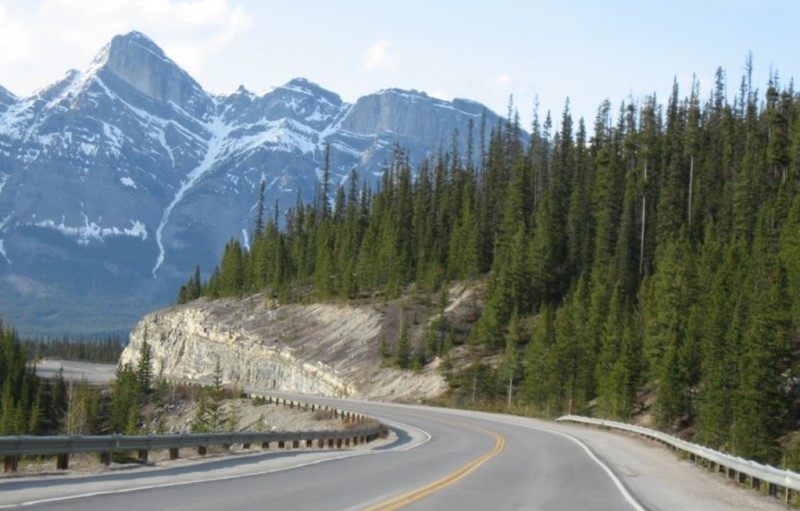
Preview Image: Rocky Mountains from Icefields Parkway