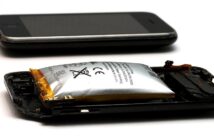
Graphite is a naturally-occurring, low cost inert material, which readily conducts electricity and heat. Most lithium-ion batteries use graphite as the basis for their anodes, through which their electrons flow to external circuits. But open-cast and deep graphite mining consume large amounts of energy. Therefore, we were immediately interested to discover that organic lithium-ion anodes could be a distinct improvement.
Towards Organic Anodes for Lithium-Ion Electrodes
The University of New South Wales in Sydney, Australia published a press release earlier this month, that we link to below. Their point of departure is the potential of new battery technologies to carry us forward to a fossil-free future.
However, their particular contribution involves using food-based acids to make lithium-ion batteries more efficient, affordable and sustainable. Quite incredibly, these materials have been present in sherbet and wine-making since at least grandmother’s farmhouse kitchen days!
The organic lithium-ion anodes that the team developed using these materials – and are protected by patents – achieve two quite remarkable things:
- They reduce the environmental impact including during processing.
- They increase the lithium-ion battery’s energy storage capability.
Smaller Pouch Cells For Our Devices in Future
The prototype battery is of a pouch cell design, although it is smaller than we might expect for the energy it stores. “We’ve developed an electrode that can significantly increase the energy storage capability of lithium-ion batteries,” lead researcher Professor Neeraj Sharma explains.
They achieved this by replacing graphite with compounds derived from food acids. These include tartaric acid that occurs naturally in many fruits, and malic acid found in some fruits and wine extracts. These food acids are readily available, and contain the necessary functional groups or chemical characteristics.
“We could potentially use food acids from food waste streams, reducing their environmental and economic impact, Prof Sharma suggests. “Our processing uses water rather than toxic solvents, so we’re improving the status quo across multiple areas.”
More Information
Bio-Graphite Anode for Lithium-Ion Battery
Burnt Cotton Anode Performing Well