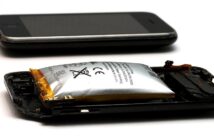
The demand continues to grow for lightweight compact batteries, with more storage capacity that charge faster. Chasing these requirements puts pressure on battery technology, and the imperative for safety. Pressure sensors in batteries monitor this safety, especially in the case of lithium-ion where we are stretching the envelope.
Pressure Sensors Monitoring Cycling Lithium Batteries
Charging and discharging, or cycling lithium-ion batteries affects their temperature, electro-chemistry, and internal mechanics according to Tech Briefs. Some observers believe these variations in interface pressure are akin to a battery ‘breathing’.
However, others point out that these stresses and strains increase, as performance falls away. In an extreme case, they say, a battery could become downright dangerous. This is where pressure sensors in batteries become very important.
The greatest growth in battery demand is in electric vehicles. Frequent calls for longer driving ranges are ratcheting up demands for increased capacity. Grid storage is not far behind either. How would these tiny pressure-warning alarms strengthen the margin of safety?
How Do Piezo Pressure Alarm Warnings Work?
Pressure sensors in batteries monitor their internal status, in order to identify early pressure increase, and signal the management system to counter thermal runaway. Their piezoresistive transducers convert mechanical force into electrical signals. These transducers report internal battery pressure increasing under three circumstances:
- Early detection of gathering thermal runaway leading to battery failure.
- Status of gases that generate / dissipate during charging / discharging.
- Internal mechanical stresses such as swelling / material degradation.
Responding and reacting to these warning signals should improve battery lifespan, safety, reliability, and efficiency. However, there are challenges to overcome during manufacture, including integrating these micro systems into batteries.
Sensors take up physical space inside casings already crammed full of components, and require protective packaging. They also need connections and wiring to mini-processing centers. None the less they are increasingly achieving their goal of providing artificial intelligence with critical information.
More Information
Internal Battery Structure By Ultrasound