China Daily reports that scientists at Fudan University in Shanghai, have developed an external lithium supply that replenishes lost ions. This novel invention could dramatically extend lithium-ion battery lifetime, to perhaps as much as 12,000 cycles. We append a link to the Fudan University report below, as it appears in the journal Nature.
Why An External Lithium Supply To Replace Ions?
Lithium ions are charge carriers that shuttle between electrodes, during discharging and recharging, Some of these ions are lost during the initial formation of the solid electrical interface on the anode. Further progressive loss occurs due to lithium plating during repeat cycling.
This loss of ions gradually reduces the amount of energy that a lithium-ion battery can store. This means it needs to be recharged more frequently, until it proves necessary to replace it. This procedure adds to the operating cost of the device receiving energy from it.
China Daily confirms that the external lithium supply that the Fudan University researchers developed, could allow lithium-ion batteries to maintain ‘near factory-fresh performance’.
Topping Up a Lithium-Ion Battery at Fudan University
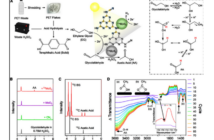
The team achieved this breakthrough by devising a novel lithium-ion molecule-carrier. We understand that their invention ‘precisely replenished’ lost lithium-ions. And thereby restored lost capacity to store energy in the battery.Their report, that we link to below, describes how the team ‘externally added’ an organic lithium salt, into an assembled cell. This salt then decomposed during cell formation, liberating lithium ions and expelling the carrier as gas.
This non-invasive and rapid process preserved cell integrity, without necessitating disassembly, they explain. This was after they used machine learning to discover the lithium trifluoromethanesulfinate salt that proved to be their solution.
This novel approach of an external lithium supply, retained the cathode and anode which were still working. We can see great potential savings for this method, which bypasses the need to disassemble and recycle lithium-ion electrodes.
More Information
Sodium Ion and Lithium Ion Batteries
How Do Lithium-Ion Batteries Work?
Preview Image: State Key Laboratory of Molecular Engineering