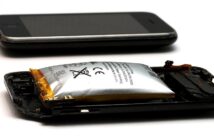
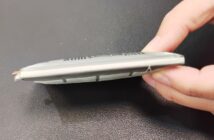
We return to Ed Conway’s fascinating article in Material World, to follow his thoughts on ground breaking silicon carbon anodes. This is something of a contraflow in batteries, because the cathode has always literally held the power. Whereas the anode is good old-fashioned, boring graphite. But is it really? Let’s find out.
Some Inner Secrets of Graphite Anodes to Share First
There’s always something interesting to write about cathodes. Scientists are forever tweaking cathode chemistry, so the electrode can hang on to more power. Phosphate and iron increase stability, whereas cobalt, manganese and nickel supercharge it further.
But we largely ignore the graphite in the anode, Ed Conway continues, because it seldom makes headlines. However, behind the scenes, the synthetic graphite we wrote about the other day is attracting attention:
- Graphite anodes must be able to store as many lithium-ions as possible.
- But at the same time, they should allow those ions to arrive and depart freely.
- Natural graphite is better for lithium-ion storage and longer battery life.
- Whereas synthetic graphite accepts and releases ions for faster charging.
So far so good. We need a blend of the two to optimize graphite anode performance. Now it’s time to share breaking news about silicon carbon anodes.
Could Silicon Carbon Anodes Challenge Lithium Battery Norms?
Silicon carbon anodes are starting to appear in a few top-end phones, with noteworthy energy storage density. Their ultra-thin batteries work on the principle that if you want high density, then your anode has to accommodate more lithium-ions while recharging.
Now it so happens, Ed Conway continues, that silicon is just the trick if you want this to happen:
- Six atoms of graphite can accommodate just a single lithium-ion.
- Whereas six atoms of silicon can accommodate 28 lithium-ions.
This sounds like an invitation to use silicon anodes in lithium-ion batteries. However, life is never that simple, as we shall share in our next post.
More Information
Do Batteries Have a Life of Their Own?