The UK National Energy System Operator, AKA National Grid, is accelerating deployment of renewable energy according to Wikipedia. The Energyst website confirms how batteries are becoming more relevant in the national energy mix. A post on BESS Analytics provides more compelling evidence that storage is more important for the UK regulator mix than ever before
Four Times More Storage Income for UK Regulator
Energyst confirms that revenues are remarkably up since 2024, with grid stabilizing reserves leaping from 4% to 20% of total system income. This change is due to the introduction of a new Quick Reserve policy in late 2024.
This arrangement is a frequency management tool, to counter grid supply-demand imbalances. This in turn creates opportunities for ‘tighter system margins’, that trigger even greater demand.
The Quick Reserve system stabilizes the grid either up or down, depending on demand within a minute. This puts batteries at a distinct advantage over other renewables, which are generally only able to reduce supply in the short run.
“The rapid rise of battery storage revenues from Quick Reserve, highlights how critical flexibility services are becoming,” explains a lead research analyst. “Getting to net zero will involve more intermittent energy generation coming on to the grid, and that is where batteries will thrive.”
More About The UK Regulator’s Battery Strategy
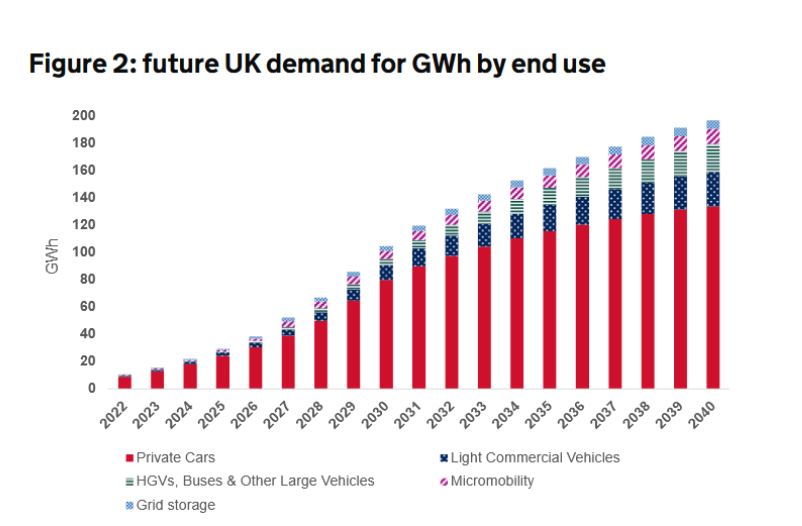
Storage is more important for the UK regulator’s long-term planning than before, according to a grid policy document we link to below. This official statement (where we also sourced our image) confirms that ‘batteries will play an essential role in the UK energy transition, and its ability to successfully achieve net zero by 2050’.
The document goes on to explain how the UK plans to have a ‘globally competitive battery supply chain by 2050’. High capacity, rechargeable batteries for devices and modes of transport, will play an equally important role.
More Information
Grid Frequency and How Batteries Help
Grid Forming Inverters and Batteries Unite
Preview Image: UK Demand for Battery Storage