Drones for commercial purposes and leisure have a tough life, with high demands on their energy. Their batteries especially feel the strain when fighting gravity during take-off. A team of researchers at U.S. Oak Ridge National Laboratory took a second look at stressed drone batteries, and concluded they do have second lives.
Drone Batteries Experience Stress During Take-Off
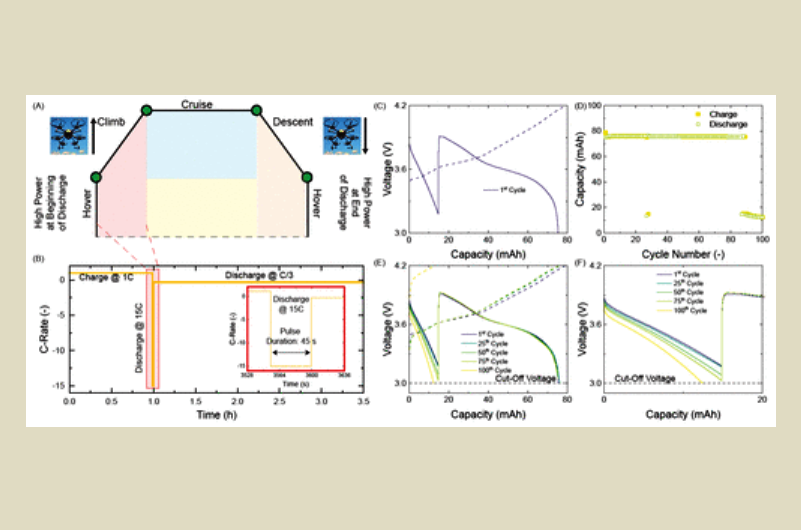
Commercial and leisure drones have high power demands during take-off, as evidenced in the diagram accompanying this post. The Oak Ridge National Laboratory researchers evaluated the behavior of drone lithium-ion batteries during a simulated study:
- First they charged them at a nominal .08 amp rate to full charge with 4.2 volt cutoff.
- Then they applied an initial pulse at a 1.2 amp rate for a burst of 45 seconds.
- They applied subsequent, gentler charges to achieve the pattern in the first part of the diagram.
The capacity patterns further on in the drawing show a relatively rapid decline to 3.0 volts, according to American Chemical Society (ACS).
Too Much Strain is Stressful for Drone Batteries
Lithium-ion batteries have become popular on account of their power per unit of volume, or weight. However, excessive strain can damage them, and shorten their useful lives. Using alternative lithium-ion polymer batteries relieves this stress, but they lack the power for long drone flights according to ACS.
Therefore, the Oak Ridge team applied their minds to future purposes for stressed drone batteries in lithium-ion format:
- The stressed cells partly retain capacity under low-voltage demand.
- However, the batteries soon fail under rapid draining conditions.
- Lithium-ion batteries are therefore not suitable for long-term, high stress use.
The researchers recommend redeploying stressed drone batteries to second life, low demand applications. Their study provides valuable insights into the relationship between high-power requirements, structural stability, and sustainable second-use strategies.
More Information
Swappable Drone Batteries Extend Flying Time
New Drone Software Adjusts for Motor Loss