Researchers at the Institute of Fiber Materials and Devices of Fudan University in Shanghai, have been thinking laterally about spent batteries. Why break up and recycle lithium-ion batteries when they have used up all their ions, they pondered. Why are we not topping up the ions in lithium-ion cells instead? After all, we do refill the tanks of gasoline and diesel vehicles constantly.
The Life Cycle of Ions in Lithium-Ion Batteries
Lithium-ion batteries, and their cells, begin their lives with a fresh supply of lithium ions in their cathodes. These groups of atoms have positive electric charges, that constitute their ‘fuel’ for want of a better word.
As we discharge a battery through an electrical device, these ions travel from the battery cathode to the anode through the electrolyte. While this is taking place, electrons from the battery travel through an external device, electrifying it.
After most of the ions have completed their journey, the battery is ‘flat’. However, if the battery is a suitable design, we can recharge it with an external electricity supply, which returns the ions from the anode to the cathode.
In theory, completing this discharge-recharge cycle reinstates the battery to its original condition, with the cathode fully replenished. However, topping up the ions in lithium-ion batteries is inevitably incomplete, for these two reasons:
- Some of the ions store in the anode, while others ‘plate’ the surface.
- The plating is permanent, some the ions in the anode remain trapped.
The net result it that all lithium-ion batteries (all batteries in fact) eventually run out of sufficient charge-carrying ions to do their work.
Topping Up The Spent Charge-Carrying Ions
Until the report from Fudan University in Shanghai appeared, we generally assumed that spent batteries had completed the first phase in their life. We either had to find a less-demanding role for them, or recycle their materials.
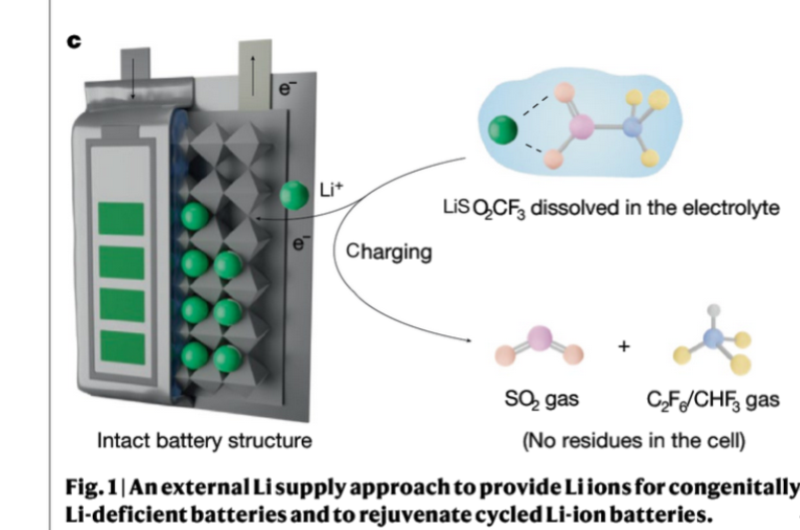
The Fudan team enrolled artificial intelligence to identify a molecule that could top up a ‘dead cell’, with a fresh supply of lithium-ions. They dissolved lithium trifluoromethanesulfinate salt (LiSO2CF3) in an electrolyte, and it did the job.
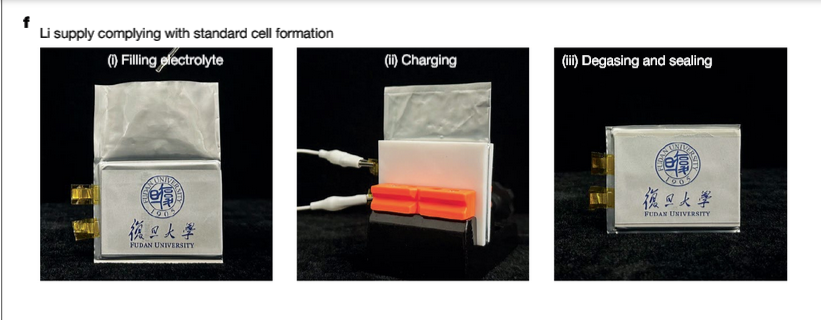
“If we can give an injection to a sick person to help them recover,” a Fudan chemist asked Scientific American, “why can’t we have a magic potion for drained batteries, too?” Indeed, we ask, why not …
More Information
Artificial Intelligence And Battery Electrolyte
Electrolytes in Electro-Chemistry Moving Ions
Preview Image: Alternative Lithium-Ion Supply