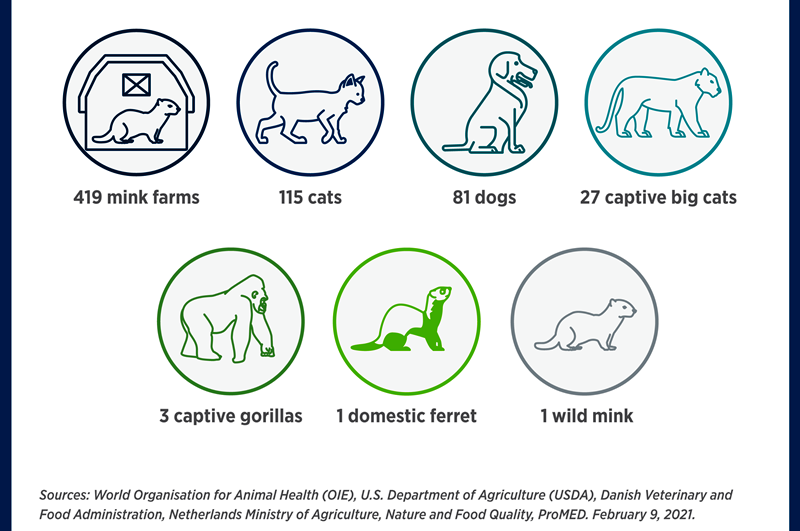
The Texas A&M University at College Station in Brazon County – also known as Agricultural and Mechanical College – founded in 1876. Researchers there have been surveying animals around households for signs of the SARS-CoV-2 viral genome. Texas has long topped the charts for this factor as a result of their study. Now KSAT News reports they found the UK variant B.1.1.7 in two Texas pets.
The Two Pets Were From the Same Household
This is apparently the first recorded detection of UK COVID variant B.1.1.7 in pets in any country, worldwide. However, it does confirm the variant’s ability to cross species barriers, according to the KSAT News report. This provides researchers fresh opportunity to better understand the process. But how serious is this really?
A zoonosis is a disease that can be transmitted from animals to people. If COVID-19 landed in humans from an animal, we have no idea which animal, and how. Frontiers in Public Health published research in 2020 that asked is COVID-19 a zoonosis, or an emerging infectious disease of animal origin. We are still waiting for an answer although the scientists favored the emerging infectious disease theory.
Did UK Variant B.1.1.7 in Two Texas Pets Come from Humans?
The pet owner confirmed their own COVID-19 diagnosis on February 10, 2021. Two days later, the virus was present in their senior black lab-mix dog, and elderly domestic short-hair cat. Neither showed obvious symptoms at the time.
However, the owner said they had both been sneezing for several weeks before the second test on March 11, 2021. All three patients are now apparently in good health. So what can we learn from the UK variant B.1.1.7 in those two Texas pets?
Casey Barton Behravesh, director of CDC’s One Health Office says it is clear the virus can move between humans and animals. Therefore, if we have the infection we should afford our pets the same protection as we do other people. The findings suggest pets fall ill after their humans show the infection, but the animals all recover without need for veterinary care.
Related
The COVID Human-Animal Link Matters
Assessing the Infection Risks of Wildlife Trade
Preview Image: SARS-CoV-2 in Animals