Scientists at Drexel University in Philadelphia, Pennsylvania, are using ultrasound to monitor batteries for flaws or damage. This could be a way forward to non-destructively avoiding catastrophic malfunctions in critical installations. Perhaps someday all battery management systems will incorporate this feature. We Investigate and report back from the frontiers of battery science …
Electrochemical and Mechanical Ultrasound-Monitoring
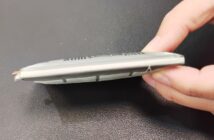
As battery makers stretch the potential of lithium-ion further, these ingenious devices have been causing a spate of battery fires. These appear to mainly involve substandard clones by pirates who cut corners. None the less, the threat is real, and it is costing human lives.
The problem to date has been spotting mechanical and electrochemical problems early enough, to prevent catastrophic failures. These issues begin inside batteries often concealed within devices, and are therefore invisible to the human eye.
The researchers at Drexel University decided that humans needed a little help from technology. They imagined something portable that would enable them to peer inside batteries, and detect what was happening.
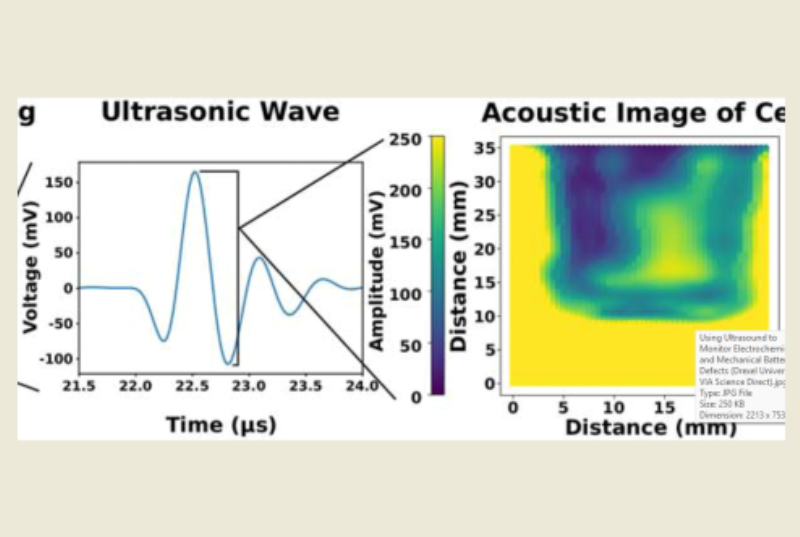
Their research report in Science Direct, which we link to below, reveals ways of using ultrasound to monitor batteries, and bring these unseen events out into the open. They learned how to immediately spot electrochemical and mechanical problems in situ, without dismantling troubled batteries.
How Ultrasound Enabled Them to Look Inside Batteries
Ultrasound is a medical imaging technique, that uses high-frequency sound waves to examine soft tissues, organs, and blood flow. The Drexel University scientists took a remarkably intuitive leap forward, when they asked themselves why not batteries too?
After all, they may have reasoned, their geophysics colleagues were already using ultra sound. This to detect cracks, voids, and other features in geological formations, and assess their physical properties and strength.

We hope this work travels further than the annals of Science Direct. The Drexel team has devised a $10,000, accessible bench-top ultrasonic tool. We hope this device proves useful to battery engineers, especially those at the forefront of EV development.
More Information
Charging Lithium-Metal with Ultrasound
Pressure Sensors in Batteries For Safety Sake
Preview Image: Ultrasound Monitors Battery Defects