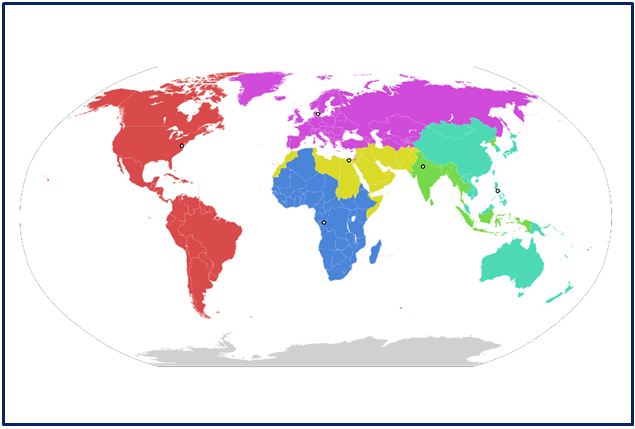
The World Health Organization (WHO) is the United Nations body responsible for international public health. Moreover, its constitution confirms ‘the attainment by all peoples of the highest possible level of health’ as its main objective. Of course, not everybody agrees it should have a finger in the pie of national health policies. We provide a short summary of its given mandate approved by the United Nations.
The Broad Mandate of The World Health Organization
The broad mandate of the World Health Organization includes advocating universal health care, and also monitoring public health risks. It must furthermore ‘coordinate responses to health emergencies’, and promote human health and well-being. Finally, it is tasked with providing technical assistance to countries, and setting international health standards and guidelines.
WHO’s notable successes include eradicating Smallpox, achieving almost the same for Polio, and developing an Ebola vaccine. However, the COVID-10 pandemic it faces is becoming the greatest challenge since it formed in 1948.
Defining WHO’s Role in International Public Health
The WHO defined its role in international public health to promote understanding as follows in 2012, and we quote:
1… Providing leadership on matters critical to health, and engaging in partnerships where joint action is needed;
2… Also shaping the research agenda and stimulating the generation, translation, and dissemination of valuable knowledge;
3… Setting norms and standards and promoting and monitoring their implementation;
4… Furthermore articulating ethical and evidence-based policy options;
5… Providing technical support, catalyzing change, and building sustainable institutional capacity;
6… Monitoring the health situation and assessing health trends;
The World Health Organization has the unenviable task of coordinating fractious nations to achieve ‘the highest possible level of health’ for all. It was never going to be universally popular, because individual health policies vary. However, many say its value has never been higher than during the COVID-19 pandemic.
Related
World Health Advice for People in Isolation
Virus Could End in Two Years Says WHO
Preview Image: WHO Regional Offices